

The most beautiful countries to visit are Norway, New Zealand, Switzerland, Iceland, Peru, Canada, Italy, Japan, Croatia and Greece. Beauty is personal, so this is our list, not a ranking. Each pick comes with a UNESCO-listed place, a real number from the UNESCO page, and one tip for planning around it.
I plan trips around the weather first and the sights second. Scenic places make that rule harder. The views that earn a country its reputation usually sit up high, near water or on the coast. The forecast changes fast in all three. If you have ever built a trip around one photo, you know the photo never tells you how long the drive takes. Use these ten as a starting point and read each tip.
The most beautiful countries at a glance
| Country | Place to know | What UNESCO says |
|---|---|---|
| Norway | West Norwegian Fjords | Fjord walls rise up to 1,400 m from the sea |
| New Zealand | Te Wahipounamu | About 2.6 million hectares, roughly 10% of the country |
| Switzerland | Jungfrau-Aletsch | Elevation runs from 809 m to 4,274 m |
| Iceland | Vatnajökull National Park | Ten central volcanoes, eight under ice |
| Peru | Machu Picchu | 2,430 m above sea level |
| Canada | Canadian Rocky Mountain Parks | Seven parks, about 400 km long |
| Italy | Amalfi Coast | 11,231 hectares across 15 municipalities |
| Japan | Mount Fuji | 3,776 m, 25 inscribed sites |
| Croatia | Plitvice Lakes | Almost 30,000 hectares |
| Greece | Meteora | 24 monasteries by the end of the 15th century |
1. Norway: fjords with waterfalls
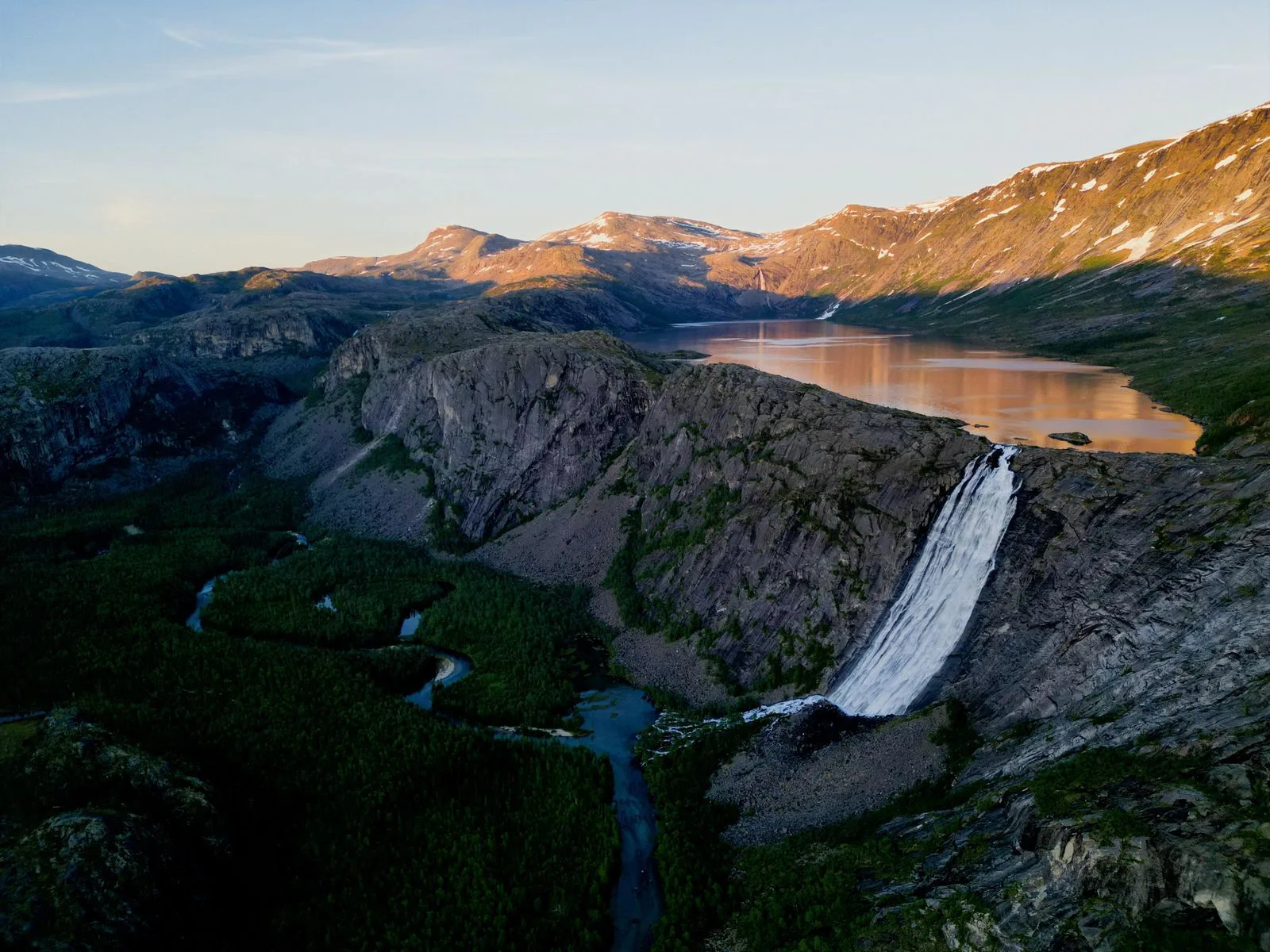
UNESCO lists Geirangerfjord and Nærøyfjord together as the West Norwegian Fjords. The steep walls rise up to 1,400 meters straight from the sea and run 500 meters below it. Waterfalls spill down them, and the fjords range from about 250 meters to 2.5 kilometers wide.
Tip: pick one fjord and stay put. UNESCO says the two are about 120 kilometers apart, which is a long day of driving for what you can see from a boat.
2. New Zealand: glaciers, fiords and rainforest

Te Wahipounamu covers about 2.6 million hectares in the south-west of the South Island, roughly 10 percent of New Zealand, UNESCO says. It spreads over a 450-kilometer strip inland from the Tasman Sea. The Southern Alps rise to nearly 4,000 meters within 30 kilometers of the sea. The Franz Josef and Fox glaciers descend into temperate rainforest.
Tip: base yourself in the south-west and pack for wet weather. UNESCO counts nearly 2 million hectares of temperate rainforest there, and the views are better when you are dry and ready.
3. Switzerland: the Jungfrau and the Aletsch

Jungfrau-Aletsch-Bietschhorn was inscribed in 2001 and later extended. Its elevation runs from 809 to 4,274 meters. UNESCO calls the Aletsch the largest glacier in Eurasia and describes the Eiger, Mönch and Jungfrau as a superlative scenic feature.
Tip: pack layers. The property runs from 809 to 4,274 meters, so the weather in the valley tells you little about the weather at the top.
4. Iceland: volcanoes under ice

Vatnajökull National Park was inscribed in 2019. UNESCO says the property covers over 1,400,000 hectares, with the roughly 780,000-hectare Vatnajökull ice cap at its heart. It contains ten central volcanoes, eight of them under ice. It also spans about 200 kilometers of the boundary where the Mid-Atlantic Ridge plates move apart. They separate at roughly 19 millimeters a year.
Tip: UNESCO classifies some 85 percent of the property as wilderness, so choose one section and do it well. Trying to see all of it is the beginner’s mistake.
5. Peru: Machu Picchu in the Andes
The Historic Sanctuary of Machu Picchu sits where the Peruvian Andes meet the Amazon Basin. UNESCO says Machu Picchu stands 2,430 meters above sea level, with about 200 structures. The sanctuary covers 32,592 hectares of mountain slopes, peaks and valleys. It was built in the 15th century and abandoned in the 16th, and it became known to the outside world in 1911.
Tip: check the official entry rules for the site before you book flights. The ticket rules are the part you cannot fix once you arrive.
6. Canada: the Rockies from Banff to Jasper

UNESCO’s Canadian Rocky Mountain Parks site joins seven parks: Banff, Jasper, Kootenay, Yoho, Mount Robson, Mount Assiniboine and Hamber. It covers about 2.3 million hectares, runs roughly 400 kilometers long and includes glaciers, lakes, waterfalls, canyons and thermal springs. The Burgess Shale fossils date to about 540 million years ago.
Tip: choose one park for each day. UNESCO says more than 95 percent of the area is kept in a natural condition, which means the roads are few and the distances are real.
7. Italy: the Amalfi Coast
The Costiera Amalfitana covers 11,231 hectares across 15 municipalities along the southern coast of the Sorrentine Peninsula, UNESCO says. Rocky ground, woods, citrus groves and vineyards run down to the sea, and terraced fields climb the slopes. The listing names Amalfi, Ravello and Positano.
Tip: base in one town and treat the others as day trips. The Lattari Mountains split the Gulf of Naples from the Gulf of Salerno, and moving hotels along a coast like this eats half a day.
8. Japan: Mount Fuji and its five lakes

Mount Fuji rises to 3,776 meters about 100 kilometers southwest of Tokyo. UNESCO’s listing has 25 sites, including pilgrim routes, shrines and the Fuji Five Lakes. It ties the mountain to Shinto and Buddhist practice and to Hokusai’s Thirty-Six Views of Mount Fuji.
Tip: you do not need to climb it to see it. UNESCO includes Lake Yamanakako and Lake Kawaguchiko in the listing, and lakes at the base are a good way to see the whole cone.
9. Croatia: Plitvice Lakes
Plitvice Lakes National Park is Croatia’s largest national park, covering almost 30,000 hectares, UNESCO says. Water has built travertine barriers that act as natural dams, creating a series of lakes, caves and waterfalls. Bears, wolves and many rare birds live in the park.
Tip: walk the lower lakes and the upper lakes as two separate outings. UNESCO divides the lakes into those two groups, and each is plenty for a day.
10. Greece: the monasteries of Meteora

Meteora is a group of monasteries on sandstone peaks in central mainland Greece, peaks UNESCO describes as columns of the sky. UNESCO says the peaks rise over 400 meters and formed about 60 million years ago from river deposits. Monks began settling the area in the 11th century. By the end of the 15th century there were 24 monasteries.
Tip: only four still house religious communities, UNESCO says, so check which are open before you set a schedule.
Pack for the worst day, not the best one
Most of the places above sit in the mountains or on a coast, and that is where forecasts break. Bring a waterproof shell, warm layers you can add one at a time, and shoes with grip. A lightweight daypack that holds all of it beats a big bag you leave at the hotel. You will want the jacket at the viewpoint, not in the car.
How to choose your country
Pick two or three, not ten. Every place here rewards a slow trip and punishes a rushed one. Start with the season and the weather, then the effort. Ask yourself how many hours you are willing to spend in a car, a boat or a train to reach the view. Norway, Iceland and New Zealand ask for time and rain gear. Italy and Greece are easier to fit into a week. If you are on a tight budget, read our list of the cheapest European cities to visit this fall. And if the trip is closer to home, the top lake vacations in the US are worth a look.
Frequently asked questions
What is the most beautiful country in the world?
There is no single answer. Our list covers ten, from Norway’s fjords to the Rocky Mountain parks of Canada. Each one has a place UNESCO recognizes for its scenery or its landscape.
Which country has the most beautiful mountains?
Switzerland’s Jungfrau-Aletsch area rises from 809 to 4,274 meters and holds the largest glacier in Eurasia, UNESCO says. New Zealand’s Southern Alps rise to nearly 4,000 meters, and Canada’s Rockies stretch about 400 kilometers.
What is the most beautiful country in Europe?
Norway, Switzerland, Iceland, Italy, Croatia and Greece are all on our list. Norway’s fjords and Iceland’s glacier and volcano country suit travelers who like wild scenery, and Italy and Greece mix landscape with history.
What is the most beautiful country in South America?
Peru is the South American pick on our list, for the Historic Sanctuary of Machu Picchu. UNESCO recognizes it for exceptional scenic and geomorphological beauty, and Machu Picchu stands at 2,430 meters in the Andes.
When is the best time to visit these countries?
It depends on the place. Check the official tourism or park site for the month you plan to travel, because mountain weather and access change with the season.