

It’s March Madness time. What you get with March Madness is five weeks of do-or-die basketball and, at the end, the crowning of a national champion. In concordance with this annual ritual, we’re subjectively analyzing 16 of the greatest college basketball players of all time. These are players that were not only talented but are icons of competitive greatness.
Certainly, this list is subject to scrutiny. There have been many great college basketball players. Many of whom could be on this list. However, even if your favorite player is not on the list, there is no arguing about the 16 players listed below. These are not only our picks, but the picks based on a composite score from a survey of sports writers, editors, and bloggers.
We’re certain you may have your own opinion about who should be on the list. Please feel free to share. We certainly welcome adverse opinions. Honorable mentions go out to J.J. Redick, Glenn Robinson, Freeman Williams, the late and great Hank Gathers and Len Bias, Glen Rice, Anthony Davis, Hakeem Olajuwon, George Mikan, Ralph Sampson, David Robinson, Michael Jordan, Patrick Ewing, Jerry Lucas, Bill Bradley, Austin Carr, Dan Issel, Shaquille O’Neal, Artis Gilmore, Tom Gola and many more.
Danny Manning (Kansas, 1985-1988)
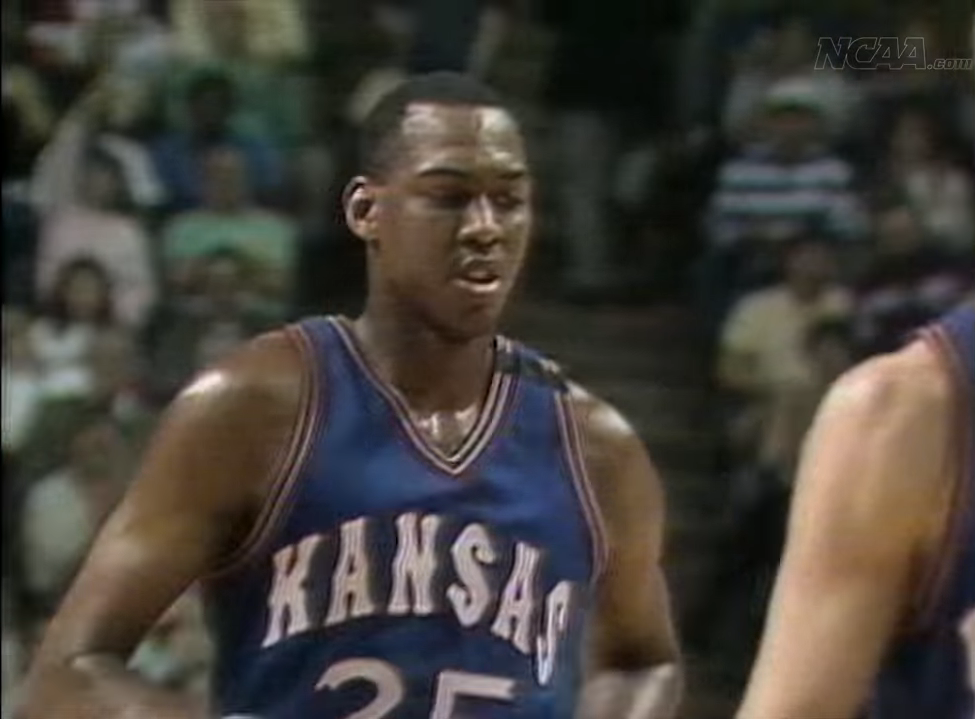
Danny Manning remains one of the most influential figures in college basketball and a defining star in Kansas history. He led the Jayhawks to the 1988 national championship with a performance that showcased his scoring touch, rebounding strength, and leadership. Manning finished his career as the program’s all‑time leader in points and rebounds, which reflects his consistency and impact across four seasons. He also earned three consensus All‑American honors. His legacy still unites Jayhawk fans who view him as a cornerstone of the program’s success and a true icon of college basketball.
Tyler Hansborough (North Carolina, 2005-2009)
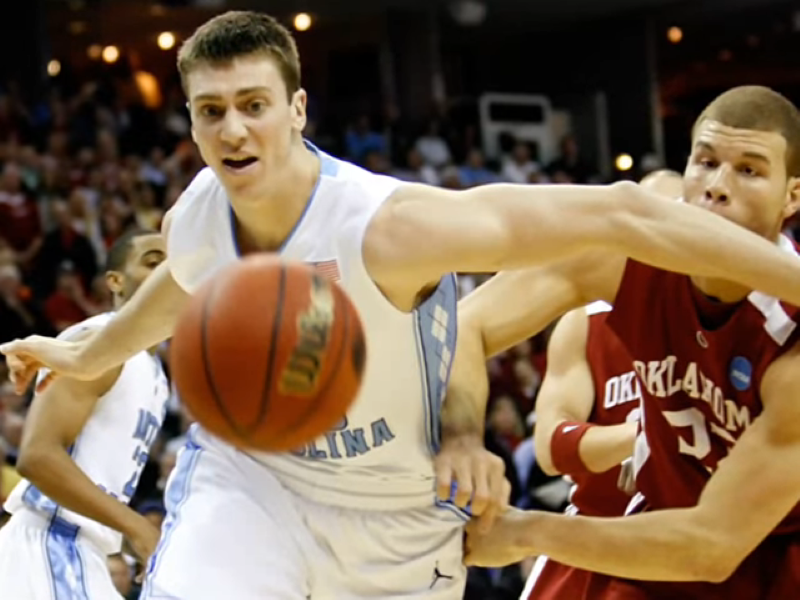
Tyler Hansborough became one of the most recognizable figures in college basketball during his four seasons at North Carolina. He helped revive the Tar Heels program and played a central role in their 2009 national championship run. His relentless energy, scoring ability, and physical style made him a difficult matchup for every opponent. Hansborough remains the only player in ACC history to earn All‑American and first‑team All‑ACC honors in all four seasons. His impact still resonates with fans who value toughness, consistency, and competitive drive in college basketball.
Tim Duncan (Wake Forest, 1993-1997)

Tim Duncan built his foundation in college basketball long before his NBA success. At Wake Forest, he developed the steady, disciplined style that later defined his professional career. He guided the Demon Deacons to four straight postseason appearances and earned two ACC Player of the Year awards. His footwork, shot‑blocking, and interior scoring made him one of the most reliable players of his era. Fans admired his calm approach and competitive focus. Bill Simmons even placed him on his Celtics wish‑list. Duncan’s college years showcased a player who combined skill, intelligence, and consistency at the highest level.
Jerry West (West Virginia, 1957-1960)

Jerry West remains one of the most iconic figures in college basketball and a lasting symbol of West Virginia athletics. Known as “Mr. Clutch,” he averaged 25 points and 13 rebounds during his Mountaineer career, showcasing rare skill and competitive drive. His influence shaped the identity of the program and elevated its national profile. West later became the inspiration for the NBA logo, which strengthened his legacy as a basketball legend. Fans still view him as the pinnacle of West Virginia greatness and a model of excellence whose impact continues across generations.
Elvin Hayes (Houston, 1965-1968)

Elvin Hayes carved out a powerful legacy in college basketball and helped reshape the sport during a pivotal era. Known for his fierce competitiveness and unmatched production, he averaged 31 points and 17 rebounds during his Houston career. His showdown with Lew Alcindor, later Kareem Abdul‑Jabbar, became a landmark moment that elevated national interest in the game. Hayes also played a key role in challenging racial barriers in the South, using his talent and visibility to push the sport forward. His impact extended far beyond statistics, making him one of Houston’s most influential athletes.
David Thompson (North Carolina State, 1972-1975)

David Thompson became one of the most electrifying stars in college basketball and helped redefine the game with his unmatched leaping ability. Known as “Skywalker,” he led NC State to an undefeated season in 1973 and guided the program to the 1974 NCAA championship. His athleticism, scoring touch, and leadership made him a dominant force during a highly competitive era. Thompson earned National Collegiate Player of the Year honors in 1975, which highlighted his impact on the sport. His legacy still influences players who value creativity, intensity, and above‑the‑rim play in college basketball.
Wilt Chamberlain (Kansas, 1956-1958)

Wilt “The Stilt” Chamberlain transformed college basketball with a level of dominance rarely seen in the sport. During his Kansas career, he averaged 30 points and 18 rebounds per game, which showcased his unmatched size, speed, and coordination. Chamberlain’s presence redefined expectations for the center position and introduced a new style of athleticism that felt decades ahead of its time. A standout track athlete as well, he moved with a fluidity that made him a true basketball unicorn long before the term existed. His impact at Kansas remains a benchmark for greatness in college basketball.
Oscar Robertson (Cincinnati, 1957-1960)

Oscar Robertson became one of the most complete players in college basketball and set a standard that few have matched. Known as “The Big O,” he averaged an incredible 33.8 points and 15.2 rebounds per game at Cincinnati, displaying rare versatility and control. His intensity earned him a reputation as a demanding competitor, yet his talent made him unforgettable. Robertson earned three consensus All‑American honors and was later described by the National Basketball Hall of Fame as “the best all‑around player in the history of college basketball.” His success helped shape the Bearcats’ identity and long‑term prominence.
Larry Bird (Indiana State, 1976-1979)

Larry Bird became one of the most influential figures in college basketball and elevated Indiana State to national prominence. Known for his elite shooting touch long before the three‑point line existed, Bird averaged 30.3 points, 13.3 rebounds, and 4.6 assists per game. His basketball IQ, efficiency, and competitive grit shaped every game he played. Bird led an unheralded Indiana State program to the NCAA Championship game, where they faced Magic Johnson’s Michigan State team. His ability to score, rebound, and create plays made him a complete player whose impact still defines excellence in college basketball.
Earvin “Magic” Johnson (Michigan State, 1977-1979)

Earvin “Magic” Johnson became one of the most captivating stars in college basketball and helped elevate Michigan State to national prominence. His blend of size, vision, and creativity made him a unique point guard who controlled every game. Johnson nearly averaged a triple‑double for his career with 17.1 points, 7.6 rebounds, and 7.9 assists per contest. He guided the Spartans to the 1979 NCAA championship and became the sport’s most popular player. Magic’s leadership and unselfish style transformed MSU from a quiet program into a national powerhouse and set the stage for his legendary professional career.
Christian Laettner (Duke, 1988-1992)

Christian Laettner remains one of the most polarizing figures in college basketball, yet his impact on Duke’s rise is undeniable. His competitive edge and confidence fueled four straight Final Four appearances and back‑to‑back national championships in 1991 and 1992. Laettner’s iconic fadeaway against Kentucky stands as one of the greatest shots in tournament history and cemented his place in the sport’s legacy. Fans may debate his personality, but his production, leadership, and postseason success make him one of Duke’s most accomplished players and a defining figure in college basketball.
Pete Maravich (LSU, 1967-1970)

Pete Maravich remains one of the most gifted scorers in college basketball and a player whose creativity still feels unmatched. Known as “Pistol Pete,” he averaged an astonishing 44.2 points per game at LSU in an era without a three‑point line. His ball‑handling, footwork, and vision created a style that felt almost futuristic. John Wooden praised his skill while noting his lack of a championship team, yet Maravich’s technical mastery and scoring brilliance set records that still stand. His influence shaped generations of players who admired his flair, precision, and unmatched command of the game.
Bill Russell (San Francisco, 1953-1956)

Bill Russell’s dominance in college basketball often gets overshadowed by his 11 NBA titles, yet his impact at San Francisco remains extraordinary. He led the Dons to back‑to‑back NCAA championships in 1955 and 1956, a feat that still defines the program’s legacy. Russell averaged 20.7 points and 20.3 rebounds per game, showcasing unmatched competitiveness and control on both ends of the floor. His defensive instincts, leadership, and relentless drive shaped USF into a national powerhouse. Russell’s college career stands as a reminder of how greatness begins long before professional accolades.
Bill Walton (UCLA, 1971-1974)

Bill Walton became one of the most dominant forces in college basketball and helped extend UCLA’s unmatched dynasty. Known as the “Big Redhead,” he led the Bruins to 88 consecutive wins, two undefeated seasons, and NCAA championships in 1972 and 1973. Walton earned National Collegiate Player of the Year honors three straight years, which reflected his consistency and impact. His 21‑for‑22 shooting performance in the 1973 title game remains one of the most efficient displays in tournament history. Walton’s blend of size, skill, and intelligence made him a legend whose influence still defines excellence in college basketball.
Lew Alcindor (Kareem Abdul-Jabbar) (UCLA, 1966-1969)

Lew Alcindor, later Kareem Abdul‑Jabbar, reshaped college basketball with dominance that forced the sport to evolve. His skyhook became the most efficient scoring move in the game and created problems for every defender. NCAA officials banned dunking from 1967 to 1975 because they believed he held an overwhelming advantage. The rule change never slowed him. Alcindor controlled games with footwork, touch, and unmatched poise. His impact reached far beyond highlight plays and influenced how coaches approached the center position.
Alcindor led UCLA to three straight NCAA championships from 1967 to 1969 and earned the tournament’s Most Outstanding Player award each year. His consistency and discipline powered the most successful run in college basketball history. He elevated the Bruins with leadership, precision, and a competitive drive that shaped every possession. Many analysts still view him as the greatest college basketball player of all time because his production and influence remain unmatched. His legacy continues to define excellence for players who study the sport’s history.
March Madness. Let’s go! What a time.