

Fantasy films increasingly occupy a rarefied space in popular culture. The realm of fantasy cinema serves as a digital looking glass, transporting audiences beyond the constraints of reality. Unlike other genres, fantasy demands a profound “suspension of disbelief,” relying on meticulous world-building and visual effects to ground impossible concepts in emotional truth. From sprawling epics that define high fantasy to the whimsical, folkloric tales that explore the human condition through metaphor; these films tap into a collective yearning for wonder and the heroic journey.
Many of these films essentially serve as modern myths, concentrated and distilled narratives that pronounce hope, convey fear, and wrestle with complex moral ambiguities. More than spectacle, the great entries in the fantasy genre create a visual language for people to navigate real-world uncertainties of war, loss and love.
Here, we’ll discuss the fantasy films that have critically defined the genre, ones that have animated the public’s imagination.
Lord of the Rings Trilogy (2001-2003)
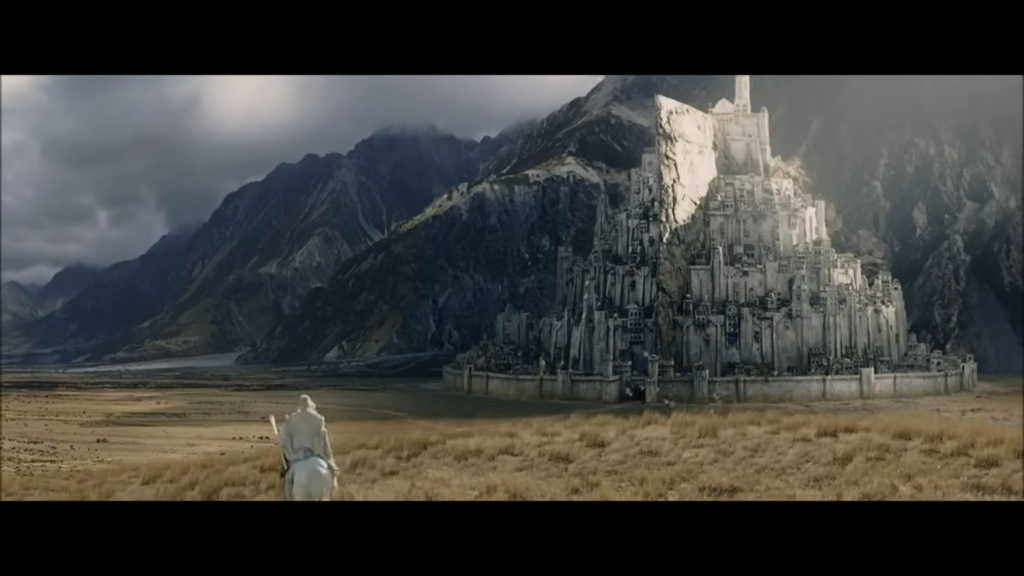
Director: Peter Jackson
Cast: Elijah Wood, Sean Astin, Billy Boyd, Dominic Monaghan, Ian McKellan, Viggo Mortensen, Orlando Bloom, John Rhys Davies, Sean Bean, Hugo Weaving, Liv Tyler, Cate Blanchett, Christopher Lee
Description: Directed by Peter Jackson and filmed entirely against the majestic backdrop of New Zealand, The Lord of the Rings trilogy (including The Fellowship of the Ring, The Two Towers, & The Return of the King) stands as a monumental achievement in cinematic history.
The narrative arc of the trilogy is a masterclass in escalating tension and character development. It begins with the formation of a diverse “Fellowship” comprising Men, Elves, Dwarves, and Hobbits, whose initial unity is tested and eventually fractured by the Ring’s corrupting influence. As the group splits, the story expands into a multi-front war, contrasting the grand-scale military maneuvers at Helm’s Deep and Minas Tirith with the intimate, agonizing struggle of Frodo and Samwise Gamgee as they navigate the desolate wastes of Mordor.
Initially regarded as a cinematic gamble for New Line Cinema, the Lord of the Rings films became a cultural phenomenon, cumulatively winning 17 Academy Awards and redefining the possibilities of a cinematic epic.
Interesting Facts:
- Award for Dedication: Christopher Lee, who portrayed Saruman the White, was an enormous fan of Tolkien’s work and campaigned arduously for a role in the film. He remains the only member of the film cast to have met and interacted with J.R.R. Tolkien.
- Beatlemania: In the 60’s, the Beatles were interested in developing their own movie adaptation of Lord of the Rings, proposing Stanley Kubrick as the nominal director. Tolkien, rather judiciously, neglected the proposal.
- “My Precious:” Originally, Andy Serkis, the actor instrumental in the crafting of a CGI-version of Gollum, was only needed for three weeks worth of voiceover work in New Zealand. When Serkis auditioned in person, however, Peter Jackson was purportedly so impressed by Serkis that he elected to apply performance-capture technology to elicit the finer nuances of his portrayal.
Harry Potter Series (2001-2011)
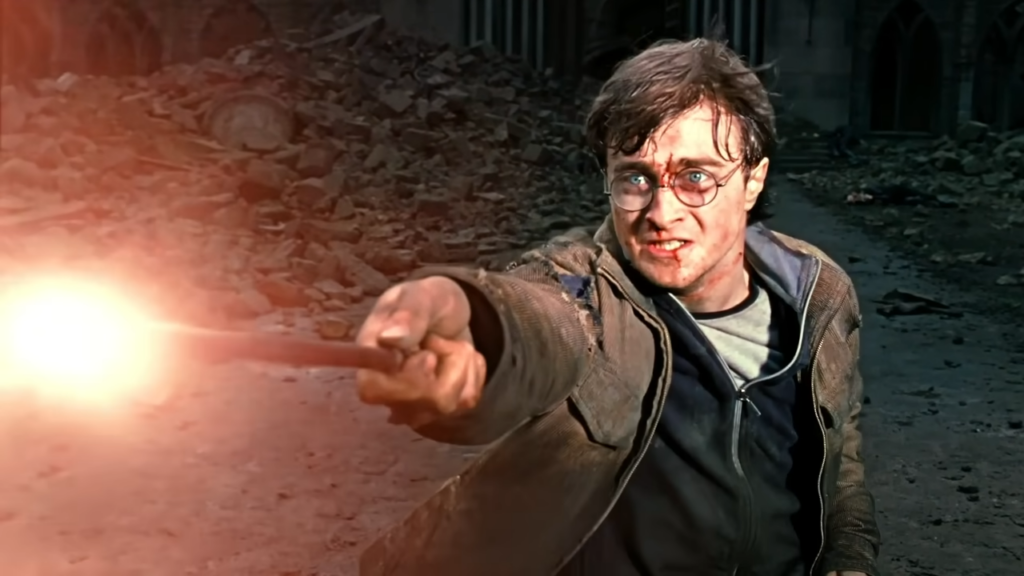
Director(s) – Christopher Columbus, Alfonso Cuaron, Mike Newell, David Yates
Cast: Daniel Radcliffe, Emma Watson, Rupert Grint, Michael Gambon, Alan Rickman, Maggie Smith, Robbie Coltrane, Ralph Fiennes
Description: Why, again, does HBO feel the need to produce an extended streaming series for the Harry Potter saga? The films suffice.
Spanning eight films released between 2001 and 2011, the Harry Potter series represents a landmark achievement in “Contemporary Fantasy.” The series follows Harry Potter’s transition from a neglected child living under a staircase to the primary symbol of resistance against the dark wizard Lord Voldemort. As Harry navigates his education alongside his loyal friends Ron Weasley and Hermione Granger, the narrative progressively strips away the comforts of the magical world, revealing a society on the brink of civil war.
Each film mirrors the aging of its protagonists, shifting the visual palette from the warm, golden hues of early childhood to the desaturated, cold atmosphere of a world under siege. The overarching conflict centers on the choice between “what is right and what is easy,” culminating in a massive battle for the school that forces Harry to embrace his role in a prophecy that demands the ultimate personal cost to ensure the survival of his community.
Interesting Facts:
- Wardrobe Malfunction: If one has read the books, they’ll be very aware that, canonically, Harry has green eyes identical to his mother’s own eyes. Though the filmmakers were eager to adapt the books as faithfully as possible, they were unable to mimic Harry’s green eyes on the screen. Daniel Radcliffe, the actor who played Harry Potter, had an allergic reaction to the green contact lenses that were going to be used, persuading Columbus to move in an alternative direction.
- Cuaron Casual: Alfonso Cuaron, the director of the third Harry Potter film, The Prisoner of Azkaban, wasn’t keen on the original wardrobe presented in the first two films, bemoaning their lack of individuality. In consultation with the costume department, the youthful cast was permitted to express their unique style under the provisions of a more lenient dress code.
- Age Adjustment: Many passionate Harry Potter fans were initially upset that the older generation of Harry Potter characters were significantly “aged-up” in the films. There was a pragmatic reason for doing so: JK Rowling was adamant that Alan Rickman play Severus Snape – a middle aged actor — prompting a demographic reconceptualization of the remaining cast.
Dune (2022 – 2026)
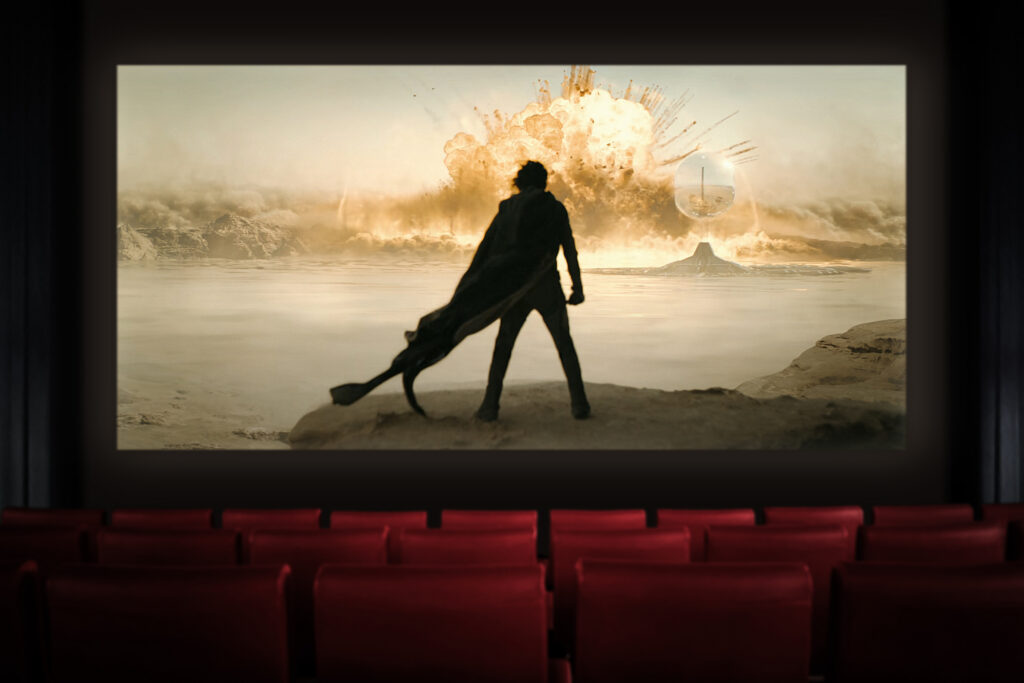
Director: Denis Villeneuve
Cast: Timothee Chalamet, Rebecca Ferguson, Zendaya, Oscar Issac, Javier Bardem, Jason Momoa, Stellan Skarsgard, Josh Brolin, Christopher Walken, Florence Pugh
Description: Directed by Denis Villeneuve, the Dune trilogy (Part One, Part Two, and the upcoming Dune: Messiah) represents the pinnacle of modern myth-making. Set on the desert world of Arrakis, the universe’s only source of the “spice” mélange, the series chronicles the fall of House Atreides. The narrative follows Paul Atreides, the scion of House Atreides, and his transformation from a displaced noble to a god-like Emperor, shifting from a classic “hero’s journey” into a deconstruction of the dangers of charismatic leadership. After surviving the betrayal of his family in Part One and leading a Fremen revolution in Part Two, the story leaps forward twelve years in Dune: Messiah. Paul now sits upon the Golden Lion Throne, haunted by a bloody intergalactic jihad carried out in his name that has claimed sixty-one billion lives.
The trilogy concludes in December 2026.
Interesting Facts:
- Ambitious Adaptation: Based on the novels by Frank Herbert, Dune has long held a cherished place in the cultural zeitgeist. Denis Villenueve, a prominent director in Hollywood noted for such films as Sicario, Blade Runner: 2049 and Arrival; had harbored the ambition of producing an adaptation of the books since he was 14, when he first read the books.
- Stolen Score: Reputable composer, Hans Zimmer declined to work on Christopher Nolan’s Tenet, instead favoring Villeneve’s incipient project of Dune, having also been a longtime fan of the novels.
- Standing Ovation:The worldwide premiere of Dune was at the Venice Film Festival, where it received a 7-minute standing ovation after its showing.
Wizard of Oz (1939)
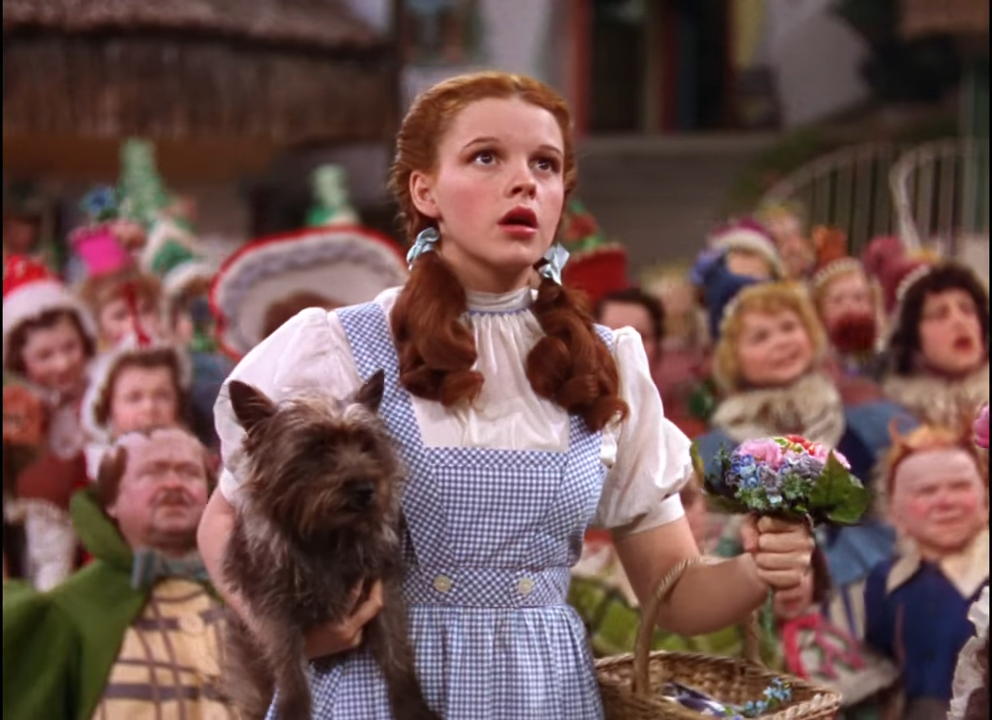
Director: Victor Fleming
Cast: Judy Garland, Jack Haley, Ray Bolger, Bert Lahr, Frank Morgan, Margaret Hamilton, Billie Burke
Description: Released during the Golden Age of Hollywood, The Wizard of Oz remains one of the most culturally significant films in history and a foundational text for the “Portal Fantasy” sub-genre. Based on L. Frank Baum’s beloved novel, the film took the daring artistic leap of transitioning from sepia-toned realism to vibrant, saturated Technicolor to distinguish the magical Land of Oz from the mundane plains of Kansas.
The story follows Dorothy Gale, a young farm girl who is swept away by a cyclone to a whimsical yet treacherous realm filled with sentient scarecrows, tin woodsmen, and cowardly lions. To return home, Dorothy must navigate the Yellow Brick Road to seek the help of a mysterious Wizard, all while evading the vengeful Wicked Witch of the West.
Beyond its visual spectacle, the film acts as a profound coming-of-age allegory; Dorothy and her companions realize that the qualities they seek—intelligence, emotion, courage, and a sense of belonging—were already latent within them.
Interesting Facts:
- Ruby Slippers: In the books by L. Frank Baum, Dorthy’s slippers are silver than red. However, the executives at MGM were so enthralled about the new Technicolor technology that was being applied to the film they made the creative adaptation of switching the color of Dorothy’s slippers to bright red.
- Burning the Witch: Margaret Hamilton, who played the notorious Wicked Witch of the West, reportedly got second and third-degree burns while filming. During a fiery escape from Munchkinland where the actress was supposed to exit via a trapdoor, it regrettably failed to open, engulfing the actress in flames. She consequently spent six weeks recovering. In a later interview, Hamilton responded humorously: “I will return to work on one condition – No more fireworks!”
- Spendthrift Production:Judy Garland, widely considered one of the most famous entertainers of the 20th century, reportedly earned only $9,600 for The Wizard of Oz. Adjusted for inflation, that would be roughly the equivalent of $218,000 today.
The Princess Bride (1987)
Director: Rob Reiner
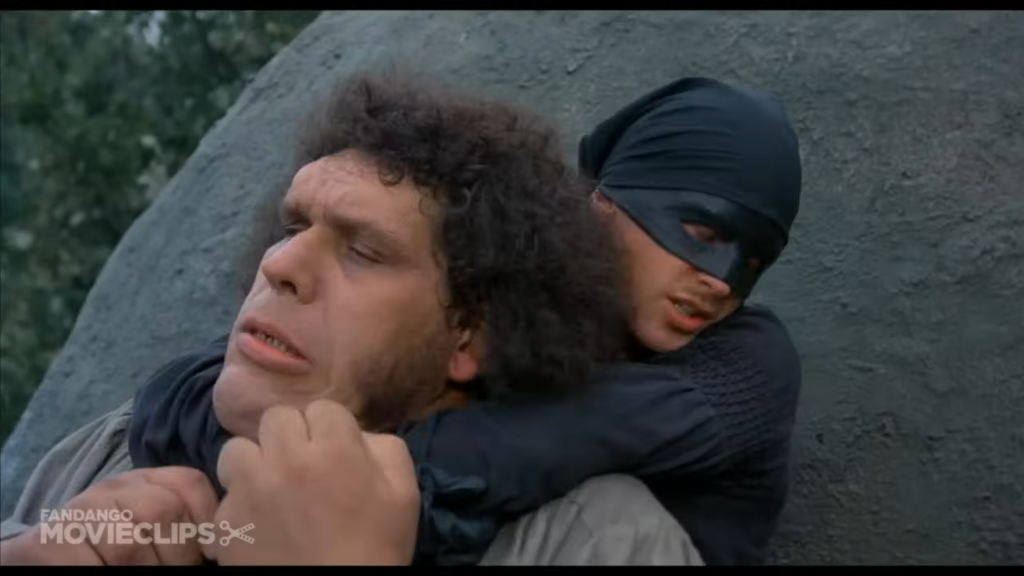
Cast: Cary Elwes, Robin Wright, Billy Crystal, Mandy Patinkin, Wallace Shawn, Fred Savage, Christopher Guest, Peter Falk, Andre The Giant
Description: Directed by Rob Reiner and adapted by William Goldman from his own novel, The Princess Bride is a cult classic that functions as both a genuine romantic adventure and a sharp parody of fairy tale tropes. The film utilizes a “meta” framing device in which a grandfather reads a book to his initially skeptical, sick grandson, allowing the movie to comment on its own narrative beats in real-time.
The story centers on the undying love between Buttercup, a beautiful young woman in the kingdom of Florin, and her farmhand, Westley. After Westley is presumed dead at sea, a grieving Buttercup is forced into a betrothal with the conniving Prince Humperdinck, only to be kidnapped by a trio of outlaws: the intellectual Vizzini, the vengeful swordsman Inigo Montoya, and the gentle giant Fezzik. As a mysterious “Man in Black” pursues them, the narrative evolves into a series of iconic trials involving the Cliffs of Insanity, the Fire Swamp, and the Pit of Despair.
Despite a modest box office debut, The Princess Bride has grown into one of the most quotable and beloved films in cinema history.
Interesting Facts:
- “Prepare to Die:” Mandy Patinkin plays Inigo Montoya, the experienced swordsman determined to avenge the murder of his father. In the film, he famously repeats the inimitable line: “Hello, my name is Inigo Montoya. You killed my father. Prepare to die.” In reality, Patinkin had also recently lost his father to cancer. According to Patinkin, while shooting his scenes, it felt as if were directing his lines toward cancer, itself.
- Pardon The Interruption: Cary Elwes once shared that, during one scene, production was suddenly interrupted, grinding to a halt. The reason? Co-star Andre the Giant had to relieve himself of a 16-second fart. Concerned, director Rob Reiner asked Andre whether he was ok. Andre’s response? Merely “I am now, boss.”
- An Inspired Title: The author of The Princess Bride, William Goldman, once recollected on the origins of his story. It began quite innocuously one evening, where he inquired of his daughters, then aged 4 and 7: “I’ll write you a story. What do you want it to be about?” One of the daughters wanted to hear about ‘a princess’ while the other mentioned ‘a bride.’ It was thus settled: Goldman named his book The Princess Bride.