

The 1990s didn’t just produce songs – it fractured the airwaves and reassembled them into something grittier, louder, and impossibly honest. From the feedback-soaked alleys of Seattle to the swaggering Britpop stages and the punk-infused basements everywhere in between, rock bands of the ’90s rewrote the rules of melody, attitude, and cultural conversation.
Why should this matter to you now? Because the fingerprints of ’90s rock are on today’s music, fashion, and even the way artists connect with audiences. The era birthed a new blueprint for authenticity – messy, confrontational, and real – that modern bands still borrow from, intentionally or not.
We’ll discuss the 90’s rock bands that became innovators, the rule-breakers, and the sleepers who deserve a second spin. Beyond sonics, these bands captured a generation’s contradictions – apathy turned to anthems, alienation turned to community, and commercial success often arriving on the back of uncompromising art.
Nirvana
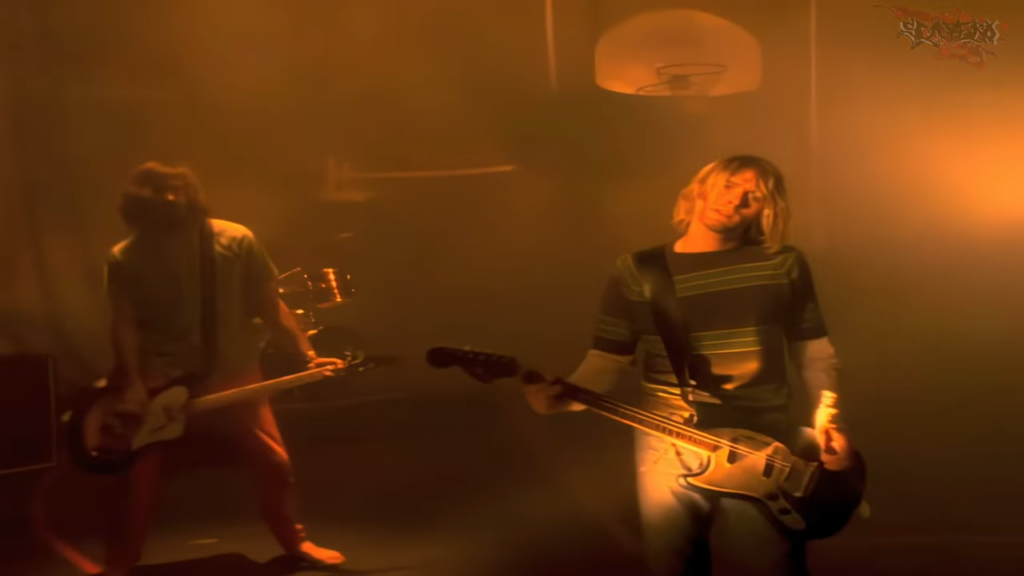
Nirvana, led by the enigmatic Kurt Cobain, bassist Krist Novoselic, and drummer Dave Grohl, effectively killed the “hair metal” era of the 1980s overnight. Emerging from the Pacific Northwest, they paired the abrasive energy of punk with melodic hooks that resonated with a disillusioned “Generation X.” Their breakthrough album, Nevermind (1991), took the world by storm, not just as a musical release but as a cultural phenomenon. Though their career was tragically cut short by Cobain’s death in 1994, the band’s legacy as the pioneers of the “Seattle Sound” remains the most influential cornerstone of modern rock.
Fun Facts:
- Deodorant Branding: The title “Smells Like Teen Spirit” came from a night of drinking. Kathleen Hanna (of the band Bikini Kill) spray-painted “Kurt Smells Like Teen Spirit” on Cobain’s wall. Kurt thought it was a profound, rebellious slogan; in reality, she was teasing him because he smelled like his girlfriend’s brand of deodorant, Teen Spirit.
- Humble Beginnings: The legendary frontman of Nirvana, Kurt Cobain, emerged from rather prosaic beginnings in the obscure town of Aberdeen, Washington. Before becoming a world-renowned singer, he worked as janitor at his local high school, using his earnings to finance his first demo.
- Percussion Change-Up: Contrary to popular perception, the iconic drummer of both Nirvana and the Foo Fighters, was not the original drummer of the iconic rock group. Before Grohl arrived in 1991, prior to Nirvana’s release of the seminal album Nevermind the band cycled through five drummers.
Pearl Jam
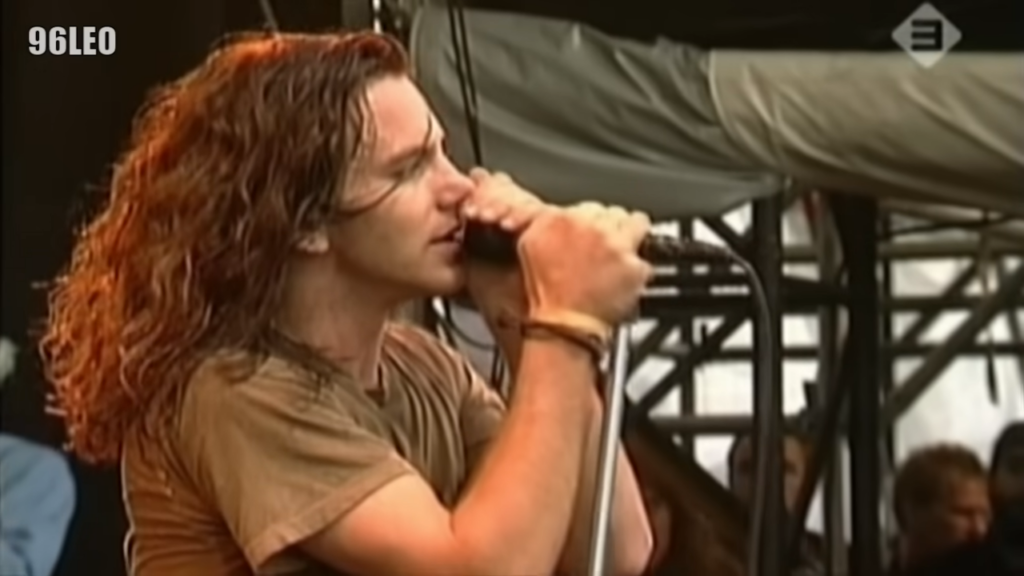
Formed in Seattle in 1990, Pearl Jam emerged from the ashes of Mother Love Bone to become one of the most commercially successful and enduring bands of the decade. Led by Eddie Vedder, whose soulful baritone became the most imitated voice in rock, the band prioritized substance over style, often shying away from the traditional trappings of fame. Their debut, Ten, was a slow-burn success that eventually became a defining document of the era, filled with soaring guitars and deeply personal lyrics. Unlike many of their peers who burned out or disbanded, Pearl Jam navigated the 90s by constantly evolving their sound, from the aggressive punk of Vs. to the experimental textures of No Code.
Fun Facts:
- Mookie Blaylock Super-Fans: Before they were Pearl Jam, the band named themselves Mookie Blaylock after the New Jersey Nets All-Star basketball player. When they signed their record deal, they had to change it for legal reasons, but they titled their debut album Ten in honor of Blaylock’s jersey number.
- Populist Roots: In 1994, Peal Jam engaged in critical litigation against the gargantuan ticket vendor, Ticketmaster. The band alleged that, due to exorbitant service fees, Ticketmaster was making Pearl Jam concert tickets too expensive for their fans. To further circumvent Ticketmaster, Pearl Jam began constructing venues and touring in open fields, one of which, the Empire Polo Club in Indio, later became the famed site of the Coachella Festival.
- Fiends for Nostalgia: The members of Pearl Jam, long before it became fashionable as a retro trend, possessed an affinity for vinyl. Their 1994 album Vitalogy was released on vinyl two weeks before being distributed on CD’s and cassettes.
Radiohead
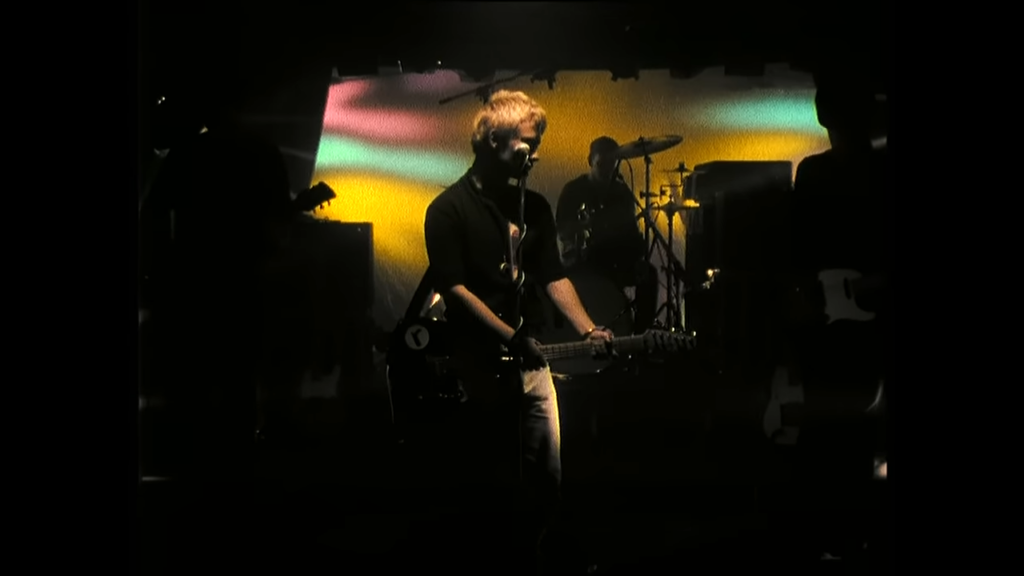
Formed in Oxfordshire, England, Radiohead entered the 90s with the massive global hit “Creep” (1992), a song that nearly pigeonholed them as a derivative alt-rock act. However, they spent the rest of the decade systematically dismantling that perception. Their second album, The Bends (1995), replaced the angst of their debut with a more textured, “angst-laden falsetto” sound that influenced an entire generation of British bands. The band reached their creative and cultural zenith in 1997 with OK Computer. Often cited as one of the greatest albums in music history, it moved away from the introspective “soul-searching” of the era to tackle themes of modern alienation, technology, and consumerism. By the time the decade ended, Radiohead had transitioned from a standard rock outfit into a fearless collective, setting the stage for the radical electronic shifts of the early 2000s.
Fun Facts:
- BBC Blues: When “Creep” was first released in 1992, BBC Radio 1 refused to play it, officially deeming the song “too depressing” for the airwaves. It wasn’t until a year later, after it became a massive hit in Israel and the U.S., that the UK finally embraced it.
- Prestige Recording Venues:Most of OK Computer was recorded in St. Catherine’s Court, a 16th-century mansion owned at the time by actress Jane Seymour. To get specific sounds, the band recorded “Let Down” in a ballroom at 3:00 AM and used the natural reverb of a stone staircase for the vocals on “Exit Music (For a Film).”
- Immortalized In Animation:In South Park’s notoriously dark episode “Scott Tenorman Must Die,” a vengeful Cartman enlists Radiohead to mercilessly taunt his avowed enemy, Scott Tenorman. Radiohead, who is Tenorman’s favorite rock band, becomes an unwitting accomplice in Cartman’s morbid revenge plot which pays homage to Shakespeare’s Titus Andronicus.
Red Hot Chili Peppers
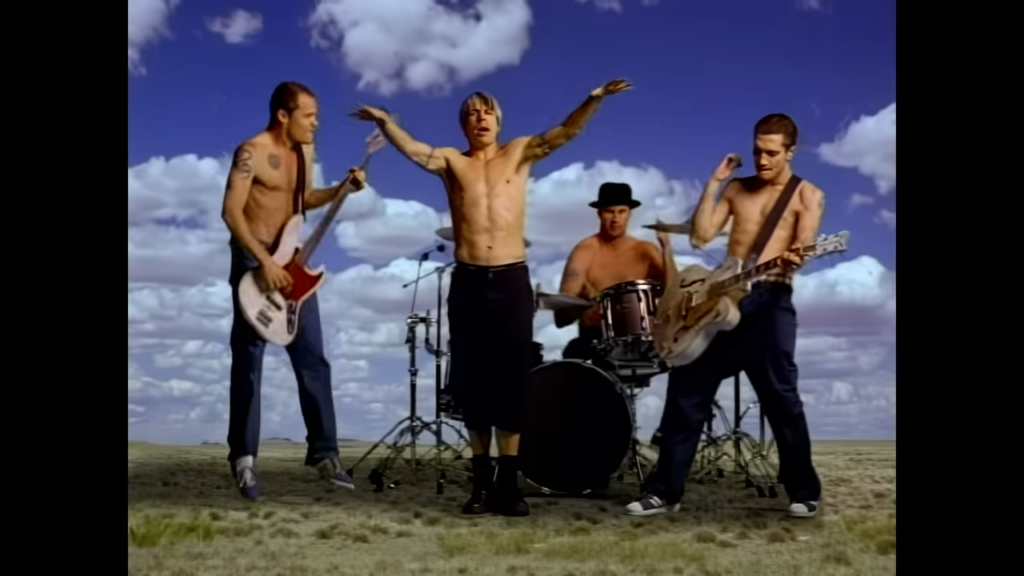
The Red Hot Chili Peppers entered the 1990s at a major turning point, having stabilized their most iconic lineup: Anthony Kiedis, Flea, John Frusciante, and Chad Smith. They kicked off the decade with the Rick Rubin-produced masterpiece Blood Sugar Sex Magik (1991), which successfully moved them from the underground into the stratosphere. While their earlier work was known for its high-octane “party” energy, the 90s saw them embrace a deeper, more vulnerable side, most notably on the worldwide hit “Under the Bridge.”
Despite a period of internal turmoil and the departure of Frusciante for much of the mid-90s—during which they released the darker, Dave Navarro-led One Hot Minute (1995)—they ended the decade with one of the greatest “comeback” albums of all time. 1999’s Californication saw the return of Frusciante and a more melodic, sun-drenched sound that solidified their status as modern rock legends.
Fun Facts:
- Haunted Sound: For their breakthrough album Blood Sugar Sex Magik (1991), the band moved into “The Mansion,” a Los Angeles estate once owned by Harry Houdini. While most of the band lived there during the session, drummer Chad Smith was so convinced the house was haunted that he refused to stay the night, opting to ride his motorcycle home every evening.
- Burning Woodstock: In one of the most infamous moments in rock history, the Red Hot Chili Peppers closed out the disastrous Woodstock ’99 festival. As fires began to break out in the crowd, they performed a cover of Jimi Hendrix’s “Fire.” Though intended as a tribute to Hendrix, many critics and organizers felt the song choice encouraged the rioting that followed.
- Rehabilitated: By 1998, the Red Hot Chili Peppers were on the verge of breaking up. Guitarist John Frusciante was living in poverty and battling severe addiction when Flea visited him and asked him to rejoin. With no guitar of his own, Frusciante practiced on a borrowed 1962 Stratocaster to write the songs for Californication, which became their biggest commercial success.
Green Day
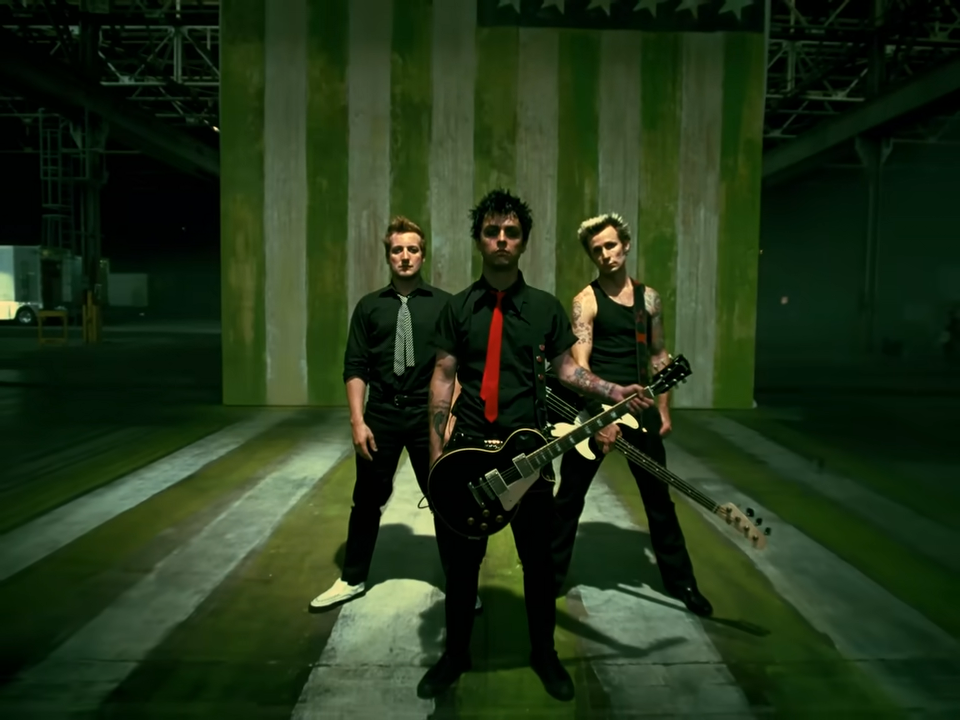
Hailing from the Berkeley, California punk scene, Green Day, consisting of Billie Joe Armstrong, Mike Dirnt, and Tré Cool; spent the early 90s building a massive underground following before exploding into the mainstream with 1994’s Dookie. Their music provided a vibrant, bratty alternative to the darker grunge scene, trading heavy distortion for fast-paced, catchy hooks and lyrics about teenage boredom and anxiety. After the massive success of Dookie, they continued to evolve throughout the decade; they released the darker, more aggressive Insomniac (1995) to appease their punk roots and then pivoted to the experimental Nimrod (1997). The latter famously featured the acoustic ballad “Good Riddance (Time of Your Life),” which showed the band’s range and became a ubiquitous anthem for a generation’s graduations and farewells.
Fun Facts:
- Banishment: After signing with a major label (Reprise) to release Dookie, Green Day was officially banned from 924 Gilman Street, the Berkeley punk club where they got their start. The venue had a strict “no major labels” policy, and many in the scene labeled them “sellouts.” It took years for the tension to cool; the ban was only symbolically lifted in the 2010s.
- So Long, Seinfeld: The acoustic hit “Good Riddance (Time of Your Life)” was originally written in 1993 after a breakup, but the band held it back because it didn’t fit the “punk” sound of Dookie. It finally exploded in popularity in 1998 when it was used during a nostalgic retrospective in the series finale of Seinfeld, forever linking the band to one of the biggest moments in TV history.
- Identity Crisis: The success of the album, Dookie, elevated punk into the stratosphere of mainstream success, alienating much of Green Day’s original fanbase. Even the band itself chafed against their newfound popularity, privately acknowledging that their burgeoning fame prompted an “identity crisis.” Though the members of Green Day still felt like a fledgling underground band, their increasing popularity wasn’t necessarily the boon they had envisioned.
The Smashing Pumpkins
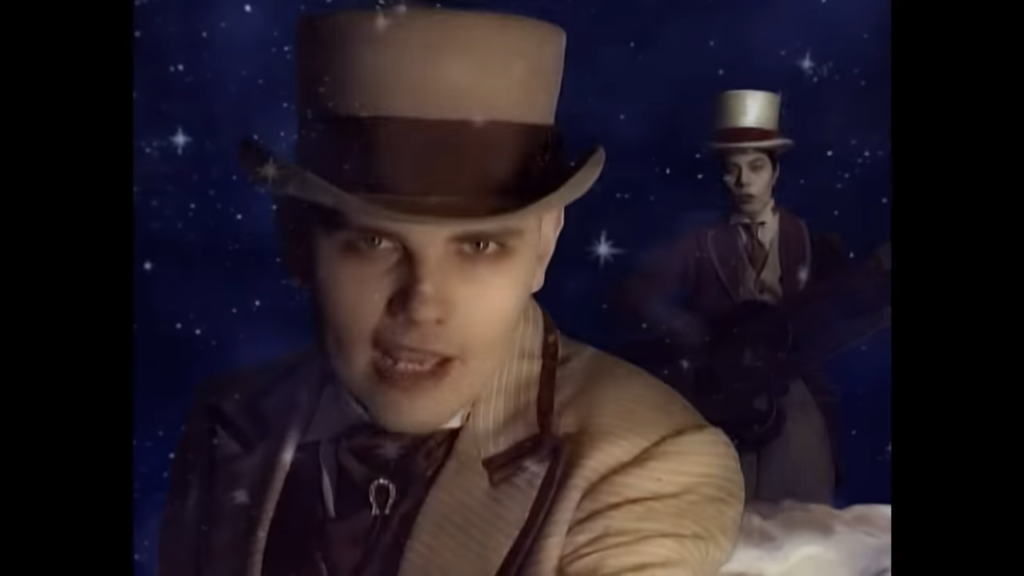
Formed in Chicago in 1988, The Smashing Pumpkins, led by the visionary and exacting Billy Corgan, alongside James Iha, D’arcy Wretzky, and powerhouse drummer Jimmy Chamberlin; defined the mid-90s with their grand musical scale. While 1991’s Gish hinted at their potential, it was 1993’s Siamese Dream that made them legends; the album featured hundreds of guitar overdubs to create a lush, shimmering “fuzz” that became their trademark.
Corgan’s lyrics often explored themes of vulnerability, angst, and childhood, resonating deeply with a generation of outsiders. They reached their commercial peak with the 1995 double-album opus Mellon Collie and the Infinite Sadness, a sprawling 28-track journey that showcased their ability to move from aggressive metal to delicate piano ballads and electronic textures. Despite internal friction and the darker tones of 1998’s Adore, the band remained a towering presence in the rock landscape throughout the decade.
Fun Facts:
- Perfectionism Personified: During the recording of Siamese Dream, Billy Corgan’s perfectionism reached an all-time high. Dissatisfied with the progress, he reportedly played nearly all the guitar and bass parts himself, overdubbing layer upon layer of sound. It took over 250 hours just to mix the song “Soma” to achieve the “wall of sound” he envisioned.
- A “Titanic” Obstacle: The band’s award-winning video for “Tonight, Tonight” was a tribute to the 1902 silent film A Trip to the Moon. However, they almost couldn’t film it because the crew of the movie Titanic had rented out almost every period-accurate costume in Los Angeles at the time.
- Double Album, Doubled Success: When the The Smashing Pumpkins told their record label they wanted to release a 28-song double album (Mellon Collie and the Infinite Sadness), the label was terrified it would fail commercially. Instead, it debuted at #1 and became the best-selling double album of the entire decade.
Metallica
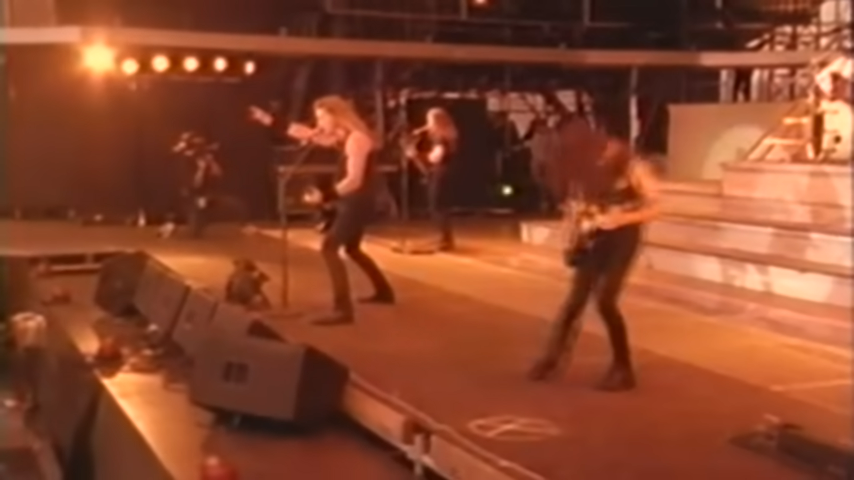
The 1990s represented a seismic shift for Metallica, as they transitioned from the kings of underground thrash metal to arguably the biggest rock band on the planet. By streamlining their complex compositions into heavy, groove-oriented anthems, they bridged the gap between heavy metal and mainstream alternative rock.
Metallica began the decade with their 1991 self-titled release, commonly known as The Black Album. Produced by Bob Rock, the record replaced the ten-minute thrash epics of their youth with concise, mid-tempo powerhouse tracks like “Enter Sandman” and “Sad But True,” as well as vulnerable ballads like “Nothing Else Matters.” This shift allowed them to dominate both MTV and FM radio, reaching an audience far beyond the metal community.
Throughout the mid-to-late 90s, the band continued to subvert expectations with Load (1996) and ReLoad (1997), incorporating blues-rock and southern-rock influences while famously updating their visual aesthetic. They closed out the decade with the ambitious S&M (1999), a live collaboration with the San Francisco Symphony that proved their music possessed a structural complexity capable of standing alongside classical arrangements.
- The Weight of The Black Album: To achieve the massive drum sound on their 1991 self-titled album (The Black Album), producer Bob Rock had Lars Ulrich record his drums in a room lined with concrete blocks. The recording process was so intense and took so long (nearly a year) that three members of the band went through divorces during the sessions.
- Prim And Proper: In 1996, Metallica shocked the metal community by debuting short haircuts for the release of Load. At the time, this was seen as a “betrayal” by hardcore fans who viewed long hair as a requirement for thrash metal. Lars Ulrich later joked that they didn’t have a group meeting about it; they all just happened to get tired of long hair at the same time.
- Early-Morning Melodies: The riff for “Enter Sandman,”arguably the most famous rock riff of the 90s, was written by Kirk Hammett at 3:00 AM. He was inspired by Soundgarden’s Louder Than Love album and wanted to create something that captured that “heavy but catchy” Seattle energy.
Soundgarden
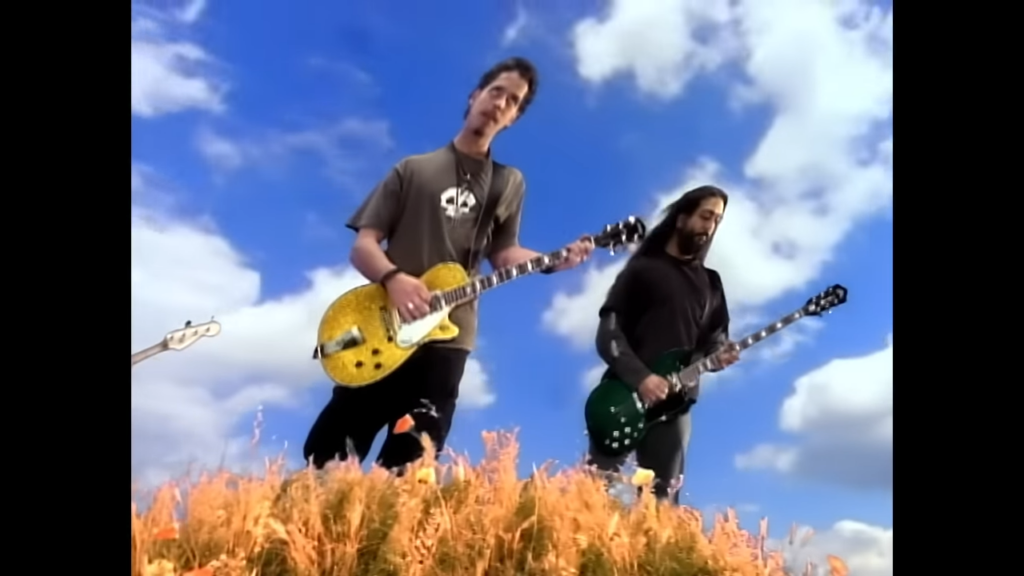
Formed in Seattle in 1984, Soundgarden, led by the incomparable Chris Cornell, along with Kim Thayil, Ben Shepherd, and Matt Cameron; spent the early 90s evolving from the raw aggression of Louder Than Love into the refined power of 1991’s Badmotorfinger. While their peers often leaned into simplified punk structures, Soundgarden embraced “odd” time signatures and unorthodox guitar tunings that gave their music a jagged, psychedelic edge.
Soundgarden’s commercial and creative apex came in 1994 with Superunknown, an album that debuted at #1 and featured the massive hit “Black Hole Sun.” Cornell’s four-octave vocal range and Thayil’s heavy, sagging riffs allowed the band to navigate between Sabbath-style sludge and Beatles-esque melody, making them one of the most respected and influential heavy rock acts of the decade.
- Daydreaming: Chris Cornell famously wrote the band’s biggest hit, “Black Hole Sun,” in about 15 minutes while driving home from the studio. He misheard a news anchor say the phrase “black hole sun” and thought it sounded like a great title. He wrote the lyrics in a stream-of-consciousness style, later admitting he didn’t really know what they meant—he just liked the imagery.
- Fortuitous Glitch: During the recording of Badmotorfinger, the band struggled to get the right sound for the track “Somewhere.” They eventually achieved the song’s unique, swirling guitar effect by accidentally plugging a guitar into a faulty bass amplifier that was smoking and on the verge of exploding.
- Will The Real “Spoonman” Please Stand Up: The song “Spoonman” was inspired by a real-life Seattle street performer named Artis the Spoonman. Artis actually played the spoons on the track and appeared in the band’s music video.