

Labor Day weekend is, for most of us, the last real excuse of the year to do absolutely nothing productive on purpose, and there is no better way to burn three unstructured days than by queueing up a run of movies that were engineered, decade after decade, to make the end of summer feel like an event rather than a deadline.
What follows is a lineup of seven certified Labor Day Weekend movies, chosen not because they’re vaguely seasonal but because they’re genuine classics that can be easily separated from cable. This is a purely fun list, built for popcorn and a full couch rather than for solemn reflection, because sometimes the best way to close out summer is to watch a shark terrorize a beach town or a bunch of kids chase a baseball into a junkyard and let that be the entire agenda.
Jaws (1975)
Steven Spielberg’s Jaws didn’t just launch the modern summer blockbuster — it essentially invented the format the entire industry still runs on, a wide-release, saturation-marketed spectacle designed to make an entire country want to be somewhere dark and air-conditioned on the same weekend. Made on a budget that reportedly ballooned past $9 million thanks to a mechanical shark (nicknamed Bruce) that famously refused to work half the time it was in the water, the film went on to gross well over $470 million worldwide, a number that made it the highest-grossing film in history until Star Wars dethroned it just two years later. It picked up three Academy Awards, for editing, sound, and John Williams’ now-instantly-recognizable two-note score, and it remains the single best argument for why a mostly-unseen monster is scarier than a fully-rendered one. Spielberg himself has since admitted that Bruce’s constant malfunctions forced him to shoot around the shark far more than he ever intended, cutting to POV shots and that ominous score instead of the creature itself — an accident of production trouble that arguably made the finished film scarier than the original screenplay ever promised.
Grease (1978)
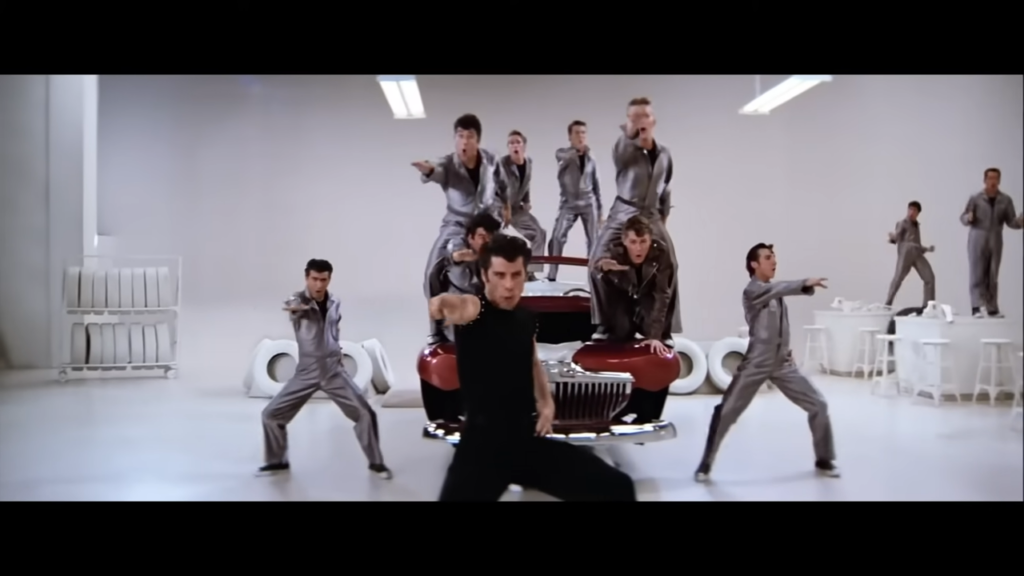
Few movies have ever bottled the giddy, nostalgic rush of an ending summer quite like Grease, which takes its Rydell High sweethearts through a school year bookended by two idyllic beach seasons and somehow makes both feel like the best days of anyone’s life. Made for roughly $6 million, it exploded into a box-office phenomenon, pulling in north of $394 million worldwide and holding the title of highest-grossing movie musical for nearly two decades before Chicago finally overtook it in 2002. The soundtrack performed just as absurdly well, spending twelve weeks at number one on the Billboard 200 and spinning off two chart-topping singles in “You’re the One That I Want” and “Summer Nights,” proof that a genuinely great movie musical can dominate the radio just as thoroughly as the box office. Both leads were also considerably older than their characters by the time cameras rolled — John Travolta was 23 and Olivia Newton-John was nearly 30, playing supposed high schoolers with a wink the audience never seemed to mind in the slightest.
Dirty Dancing (1987)
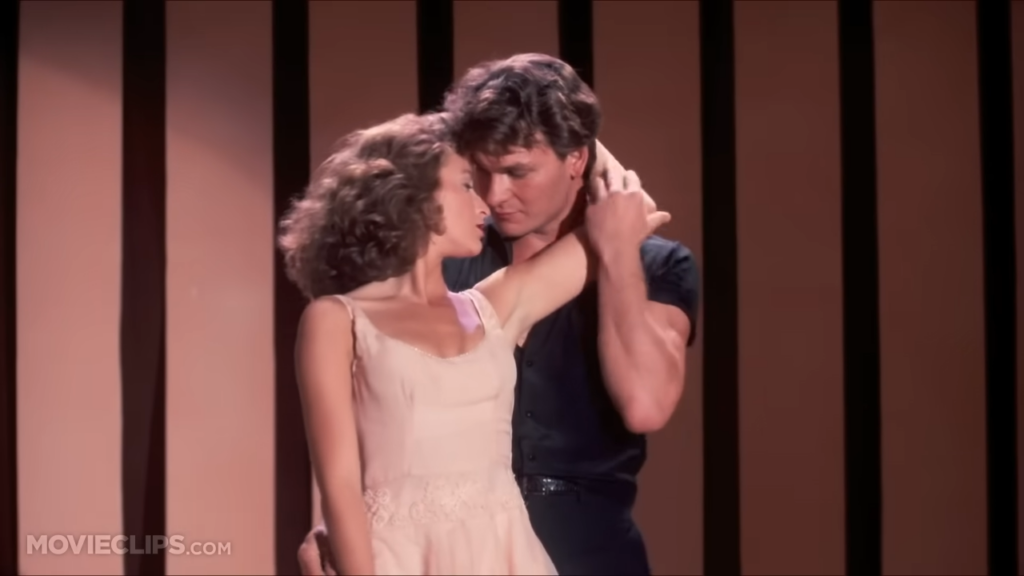
Set during the final, sun-drenched weeks of the summer of 1963 at a fictional Catskills resort, Dirty Dancing builds its entire emotional arc toward the last-night talent show that closes out the season, which makes it about as perfect a Labor Day weekend watch as the calendar could possibly hand you. Shot on a scrappy budget reported around $5 million, it turned into a worldwide phenomenon, grossing north of $214 million and becoming, for a stretch, the first film ever to sell over a million copies on home video. “(I’ve Had) The Time of My Life” took home the 1988 Academy Award for Best Original Song, and the film’s famous lift — Patrick Swayze hoisting Jennifer Grey overhead in the lake — reportedly took the pair days of practice to nail on camera, which somehow makes the moment even more satisfying to watch land.
Top Gun (1986)
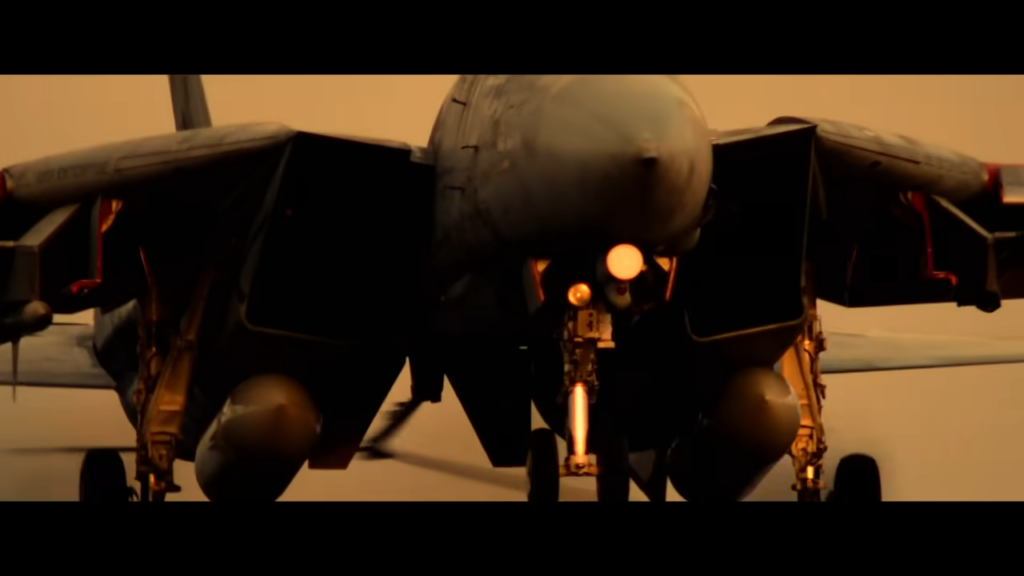
Tony Scott’s Top Gun turned Naval aviation into a full-blown pop-culture obsession, and it did so with a soundtrack, a cast, and a needle-drop-heavy opening sequence that together made 1986 feel like it belonged entirely to Tom Cruise. Made for around $15 million, it soared to a domestic gross of roughly $177 million, finishing as the highest-grossing film of the year and reportedly causing a genuine, documented spike in applications to Navy recruiting offices in the months after release. Kenny Loggins’ “Danger Zone” and Berlin’s “Take My Breath Away” both became inescapable radio staples, with the latter winning the Academy Award for Best Original Song, and the film’s mix of aerial dogfights and beach volleyball remains one of the most purely fun two-hour packages the eighties ever produced. The Navy reportedly cooperated closely with production, lending real F-14 Tomcats and carrier access in exchange for input on the script, a partnership so mutually beneficial that recruiters were said to have set up tables directly outside some theaters during the film’s original run.
The Sandlot (1993)
There is a very specific strain of end-of-summer nostalgia that The Sandlot captures better than almost any other film ever made, following a scrappy group of kids through one perfect, sunburned baseball season that ends, fittingly, right as the school year looms. Made on a modest budget of roughly $7 million, it opened quietly and grossed just over $32 million theatrically, numbers that undersold its future entirely, since it went on to become one of the most beloved cult classics of the decade once cable and home video gave it the long life it deserved. The line “You’re killing me, Smalls!” has become such a fixture of American vocabulary that it barely registers as a movie quote anymore, and the film’s climactic run-in with the towering junkyard dog known as The Beast remains one of the most purely thrilling kid-movie sequences ever shot on a suburban budget.
National Lampoon’s Vacation (1983)
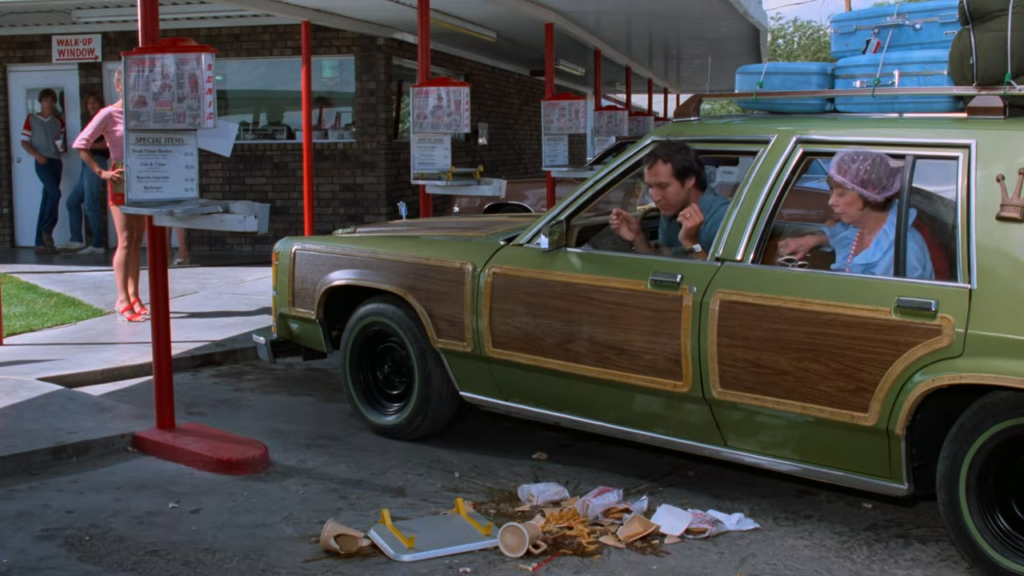
Few comedies have skewered the American family road trip with as much gleeful chaos as National Lampoon’s Vacation, which sends Chevy Chase’s Clark Griswold and his long-suffering family cross-country toward the fictional theme park Walley World in a beat-up station wagon that seems determined to sabotage the entire journey. Made for a lean budget around $15 million, it grossed roughly $61 million domestically, a hit strong enough to spawn four sequels and turn the Griswolds into one of American comedy’s most durable franchises. The film’s screenplay, based on a National Lampoon magazine story by John Hughes, was reportedly rewritten extensively during production, and its DNA is still visible in essentially every disaster-family-road-trip comedy that’s followed it since.
A League of Their Own (1992)
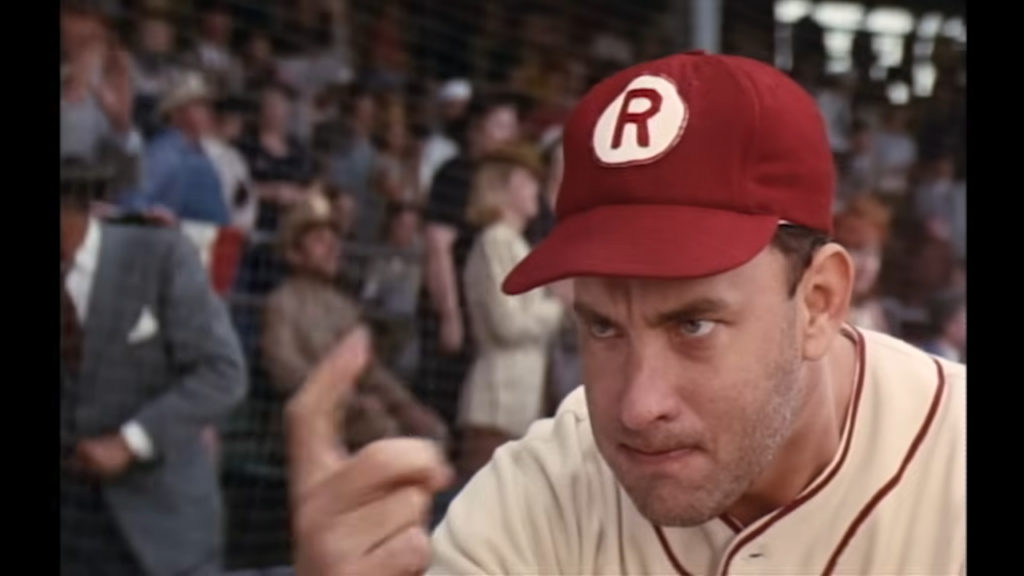
Penny Marshall’s A League of Their Own tells the real, largely forgotten story of the All-American Girls Professional Baseball League, which fielded teams across the Midwest while so many major-league men were off fighting World War II, and it does so with an ensemble — Geena Davis, Tom Hanks, Rosie O’Donnell, Madonna — that somehow makes every single storyline land. Made for around $40 million, it grossed roughly $132 million domestically, a genuine hit that outperformed most expectations for a period baseball drama built around an ensemble cast of women. Hanks’ gruff, immortal delivery of “There’s no crying in baseball!” has outlived nearly every other quote from its era, and the film remains one of the rare sports movies that’s equally beloved by people who’ve never watched a full inning of actual baseball. The league it depicts was very real, running from 1943 to 1954 and fielding well over 600 players across its history, and several of those actual former players reportedly served as consultants and stunt doubles on set, lending the movie’s diamond scenes a level of authenticity that a purely fictional script could never quite have matched.