

Since 1984, the Criterion Collection has functioned as something like a canon-in-progress for serious cinephiles — a curated library that treats film restoration and supplementary scholarship with the same rigor once reserved for literature or classical music. Its reputation was built largely on European art cinema and Japanese masters, but American filmmaking occupies an equally serious place in the catalogue, and its inclusion makes an implicit argument: that popularity and formal rigor are not opposed, and that Hollywood studio pictures, countercultural comedies, and independent films made on shoestring budgets can sit alongside Bergman and Kurosawa without diminishment. The ten Criterion Collections films below trace the range of that American achievement, from silent-era slapstick to New Hollywood’s disillusionment to the low-budget regionalism of the early 1990s. Each altered the vocabulary of American cinema in a way that still governs how films get made and watched today.
1. Modern Times (1936, dir. Charlie Chaplin)
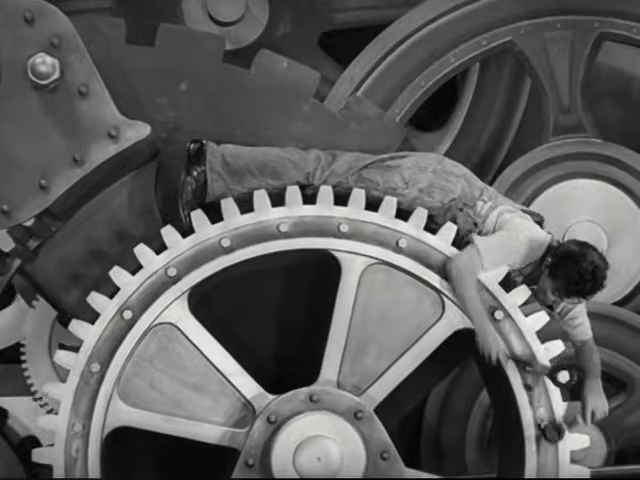
The first of Criterion Classics constitutes Chaplin’s last outing with the Tramp character. It is also Chaplin’s most explicitly political film, a satire of industrial labor and the assembly line made at the tail end of the Great Depression, when synchronized sound had already rendered silent comedy nearly extinct. Chaplin resisted the transition to talkies longer than any major star of his stature, and Modern Times is a deliberate, defiant argument for the continued expressive power of pantomime — the film uses recorded sound only for mechanical and broadcast noises, never for dialogue, as if to suggest that speech itself belongs to the dehumanizing machinery the Tramp is fighting against. The image of Chaplin literally pulled through the gears of a factory conveyor belt has become one of the most reproduced in cinema, a visual shorthand for mechanized labor’s assault on the individual body that still circulates in classrooms and labor iconography today.
2. Sullivan’s Travels (1941, dir. Preston Sturges)
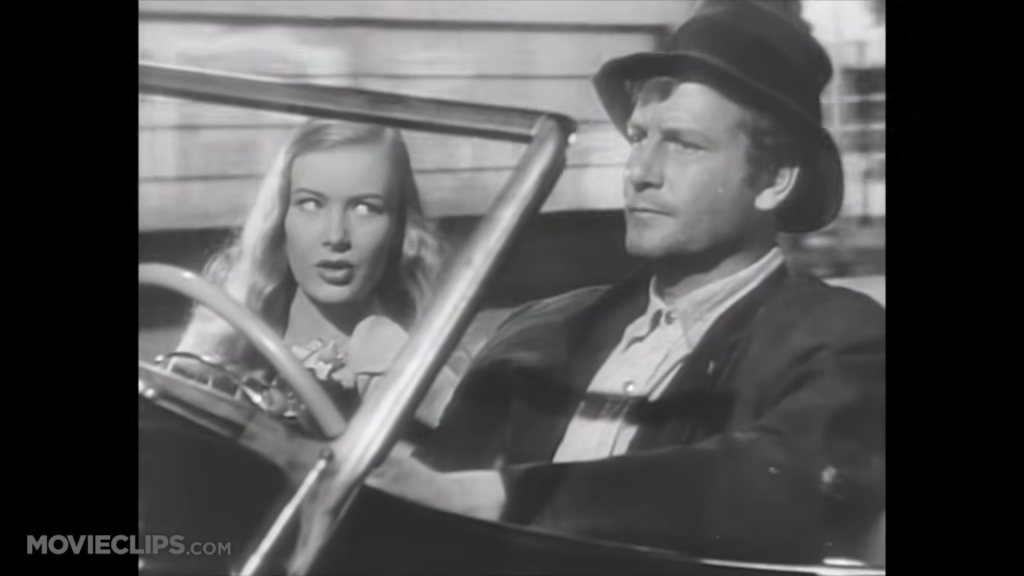
Sturges’s Criterion comedy about a successful Hollywood director determined to make a “serious” film about poverty and Depression-era suffering, only to discover firsthand the gulf between his intentions and lived hardship, remains one of American cinema’s sharpest self-critiques of its own industry. The film’s structure — a broad studio comedy that pivots into a genuinely bleak sequence involving a chain gang — was a formal risk few directors of the period would have attempted, and its final insight, that comedy itself has serious social value for people enduring real suffering, reads as Sturges’s rebuttal to the prestige social-issue pictures fashionable at the time. Sturges, who had already established himself as one of the few writer-directors of the studio era with genuine authorial control over his scripts, used the film to argue for his own craft’s dignity, and the argument has aged well enough that “Sullivanesque” has become critical shorthand for films that puncture their own self-importance.
3. The Night of the Hunter (1955, dir. Charles Laughton)
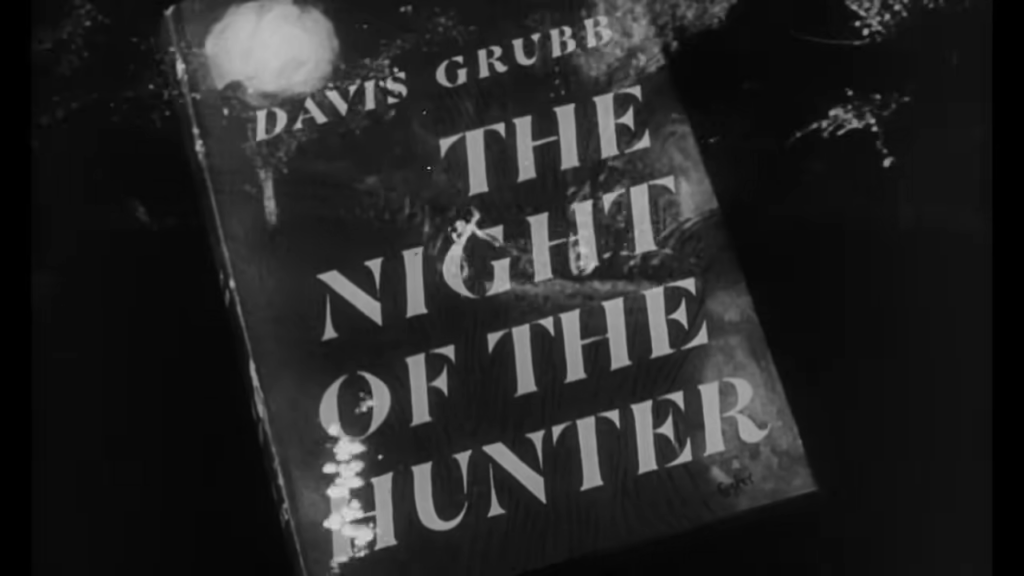
The only film the acclaimed actor Charles Laughton ever directed was a critical and commercial failure on release, so poorly received that Laughton never got the chance to direct again — a verdict that has been almost completely reversed by subsequent generations of critics and filmmakers. Robert Mitchum’s performance as a murderous preacher with “LOVE” and “HATE” tattooed across his knuckles, stalking two children across a stylized, expressionist American gothic landscape, remains one of the most unsettling villain performances in the studio era, aided by Stanley Cortez’s high-contrast, deep-shadow cinematography that owes more to German silent cinema than to contemporary Hollywood convention. The film’s fairy-tale logic — a river journey lit like a dream, animals watching in silhouette as the children drift past — gave American cinema a visual language for menace that directors from David Lynch to the Coen brothers have drawn on since, and its critical rehabilitation is now treated as one of film history’s great reversals.
4. The Graduate (1967, dir. Mike Nichols)
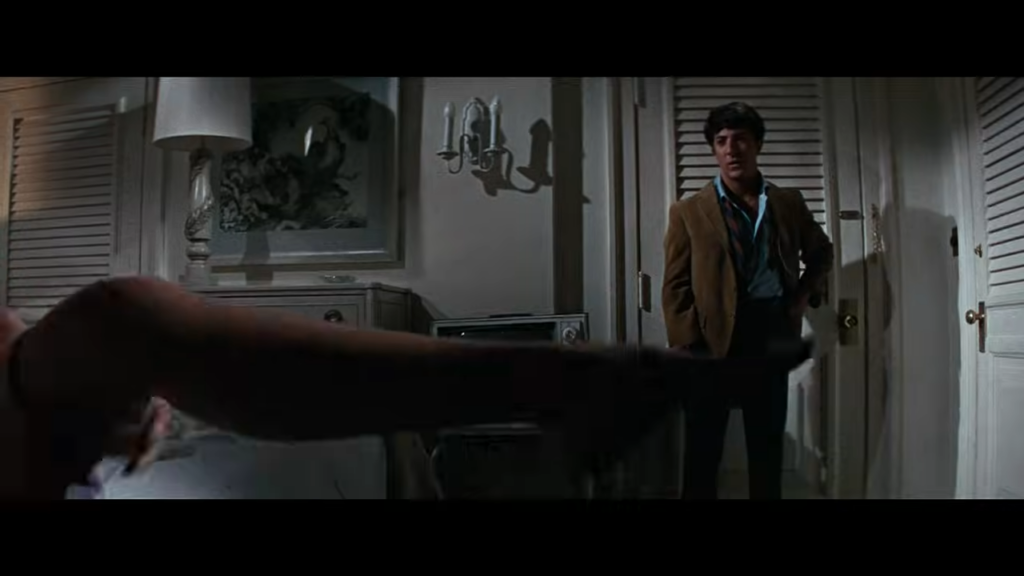
Few American films have entered the popular Criteron imagination as thoroughly as The Graduate, and few have earned that ubiquity through such precise craft. Nichols, working with cinematographer Robert Surtees, used zoom lenses, compressed telephoto framing, and a soundtrack built almost entirely around Simon & Garfunkel to convey a specific kind of postgraduate paralysis — the sense of drifting through a life that has already been arranged without one’s consent. Dustin Hoffman’s deadpan performance as Benjamin Braddock, adrift after college and pulled into an affair with an older family friend, resists easy sympathy in ways the film’s romantic-comedy reputation tends to flatten. Nichols won the Academy Award for Best Director, and the film’s final sequence — a wedding-day escape that curdles into uncertainty as the couple’s exhilaration fades in real time on a bus — remains a masterclass in undercutting a happy ending without ever cutting away from it.
5. Rosemary’s Baby (1968, dir. Roman Polanski)
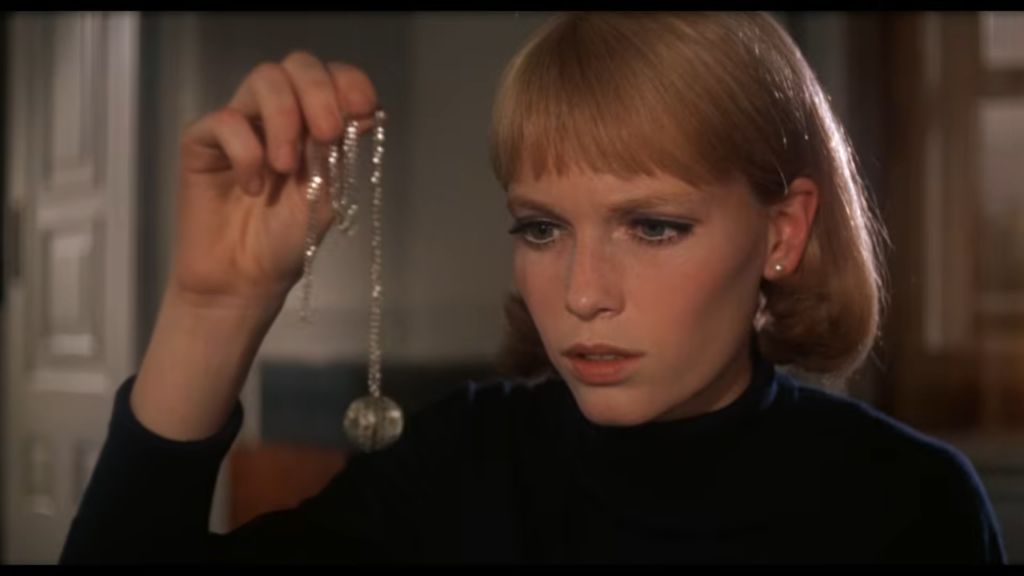
Polanski’s adaptation of Ira Levin’s novel about a young wife who suspects her elderly neighbors and complicit husband are enlisting her in a satanic conspiracy remains one of the most controlled slow-burns in American studio filmmaking. Polanski shoots almost the entire film from Rosemary’s claustrophobic point of view, withholding confirmation of the conspiracy until the final minutes and forcing the audience to share her uncertainty about her own perception — is she the victim of an occult plot, or of ordinary medical paternalism and marital betrayal dressed up as one? Mia Farrow’s performance, built on mounting physical frailty and psychological isolation, anchors a film that reshaped the horror genre’s relationship to domestic space, proving that dread could be generated entirely through implication, sunlight, and an apartment building’s ordinary neighbors.
6. Harold and Maude (1971, dir. Hal Ashby)
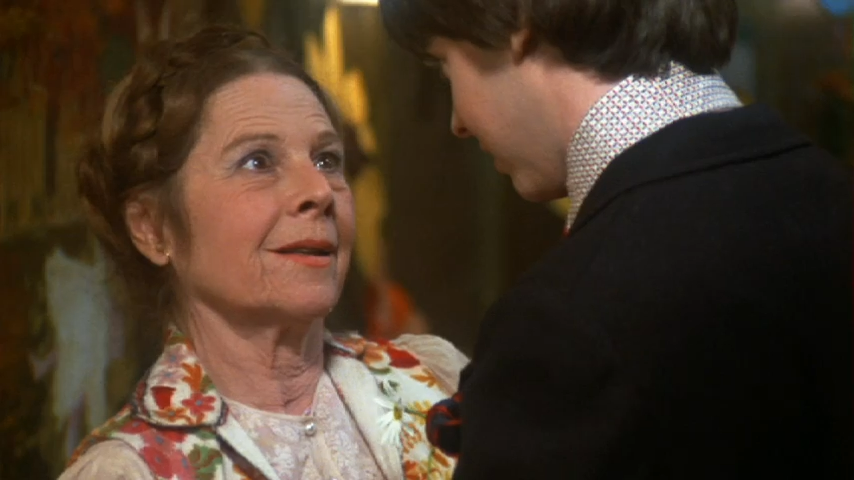
Ashby’s dark Criterion comedy about a death-obsessed young man and his unlikely romance with a septuagenarian Holocaust survivor was a critical and commercial disappointment on release, dismissed by many reviewers as morbid and tonally erratic — a reception it has almost entirely outgrown in the decades since, aided considerably by a Cat Stevens soundtrack that became inseparable from the film’s cult afterlife. Ashby’s flat, deadpan comic timing, applied to material involving funerals, faked suicides, and a hearse repurposed as a sports car, produced a register that countercultural audiences of the early 1970s embraced even as mainstream critics recoiled. Ruth Gordon’s performance as Maude gives the film’s philosophy of embracing life in the face of mortality a genuine, unsentimental weight, and the film’s steady climb to canonical status is now cited as a textbook case of a work reclaimed by audiences long after critical consensus first dismissed it.
7. Taxi Driver (1976, dir. Martin Scorsese)
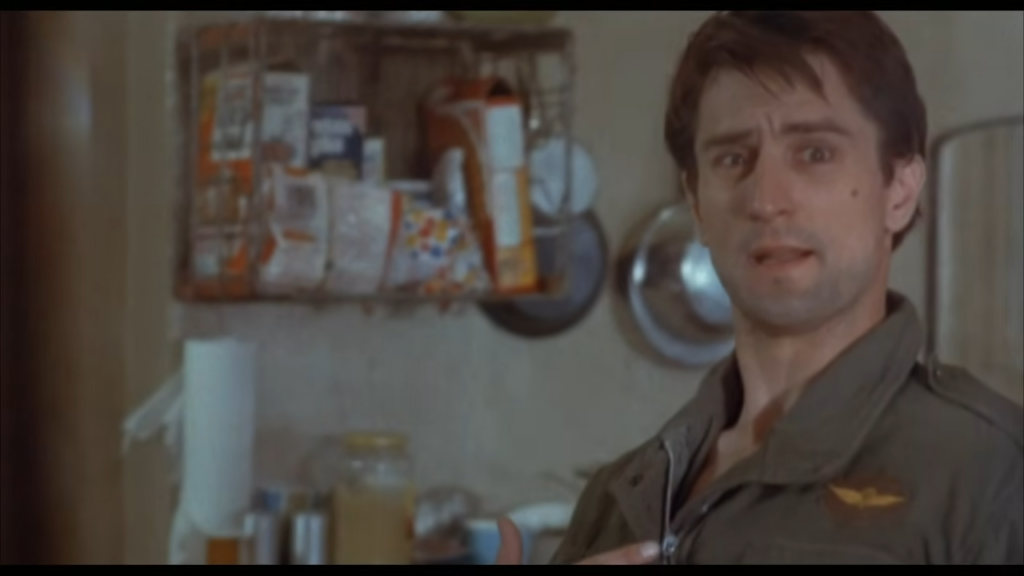
Scorsese and screenwriter Paul Schrader’s portrait of Travis Bickle, an insomniac Vietnam veteran driving a cab through a decaying, crime-saturated New York, remains one of American cinema’s most unsettling character studies precisely because it refuses to resolve whether Travis’s eventual violence should be read as heroism or psychosis — the film’s ironic, tabloid-hero ending has been debated by critics for decades. Michael Chapman’s cinematography turns the city into a fog of neon and steam, while Bernard Herrmann’s score, his last before his death, oscillates between noir menace and mournful saxophone. Robert De Niro’s performance, built from an unnerving stillness punctuated by sudden volatility, established a template for the isolated urban antihero that directors have been revisiting ever since. The film won the Palme d’Or at Cannes and remains a fixture of critics’ greatest-films lists and a veritable Criterion classic.
8. Days of Heaven (1978, dir. Terrence Malick)
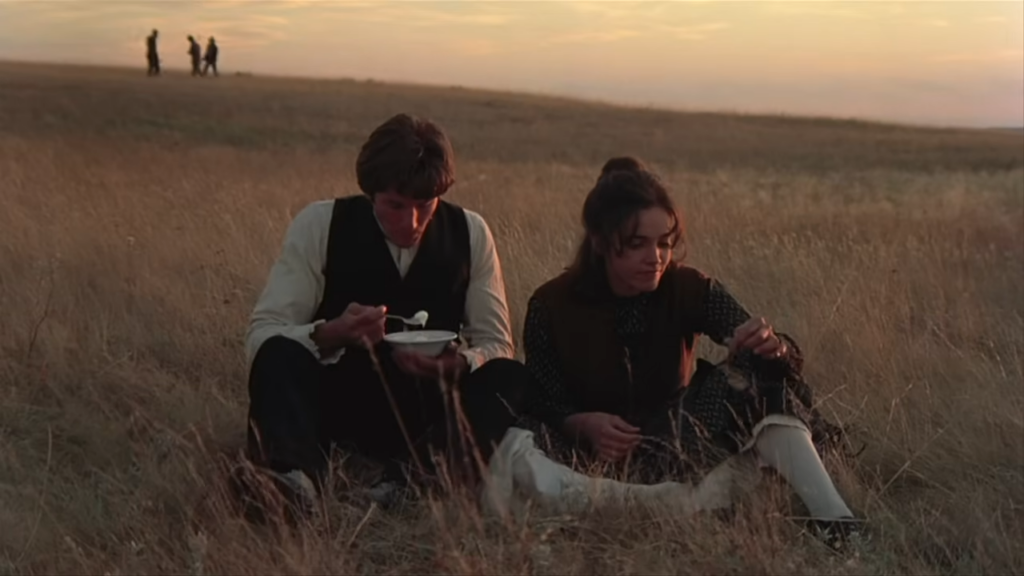
Malick’s story of migrant farmworkers and a fatal love triangle unfolding across the Texas Panhandle wheat fields is, on a shot-by-shot basis, among the most rigorously beautiful films in American cinema, largely because Malick and cinematographer Néstor Almendros insisted on shooting during the “magic hour” of dusk, when natural light turns diffuse and golden — a decision that stretched the shoot for months and won Almendros the Academy Award for Best Cinematography. The narrative, sparse and elliptical, is filtered through the voiceover of a teenage girl whose flat, unsentimental narration deliberately undercuts the operatic visuals unfolding around her. The result is a film more interested in the indifference of landscape to human tragedy than in melodrama, and its influence on the look of American prestige cinema is difficult to overstate.
9. Do the Right Thing (1989, dir. Spike Lee)
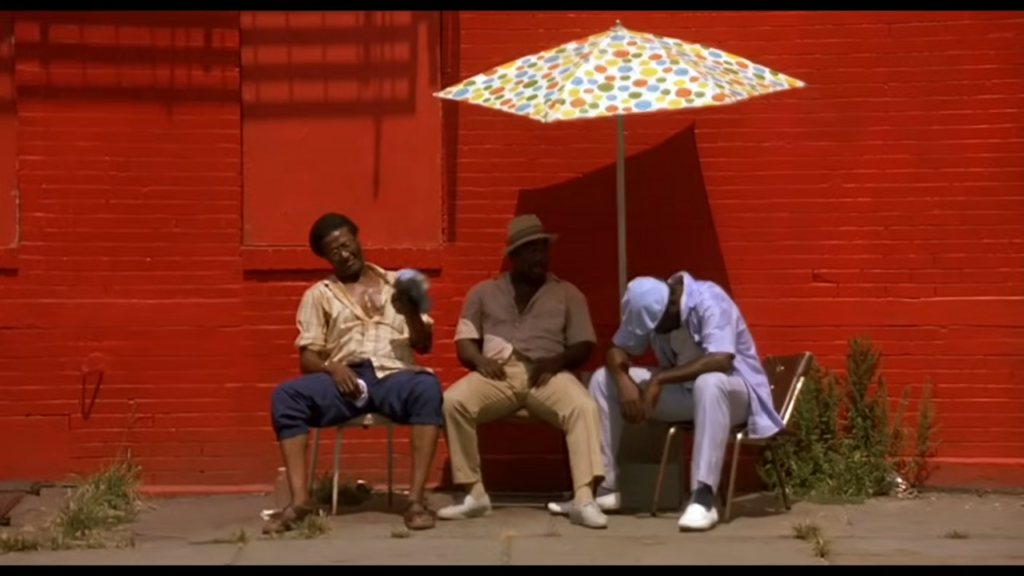
Lee’s Criterion film, set over the course of the hottest day of the summer in a Brooklyn neighborhood approaching racial and economic breaking point, was a formal and political provocation on release — famously mischaracterized by some critics as an incitement to violence — that has only grown in critical stature since. Ernest Dickerson’s cinematography saturates the frame in reds and oranges to make the heat itself a dramatic force, while Lee’s use of direct address, canted angles, and a soundtrack anchored by Public Enemy’s “Fight the Power” fuses documentary immediacy with stylized composition. The film’s refusal to offer its audience a comfortable resolution — ending not with reconciliation but with two competing quotations, from Martin Luther King Jr. and Malcolm X, deliberately left in tension — was a structural risk that paid off critically, and the film is now regularly cited among the most significant American films of its decade, another unequivocal Criterion classic.
10. Dazed and Confused (1993, dir. Richard Linklater)
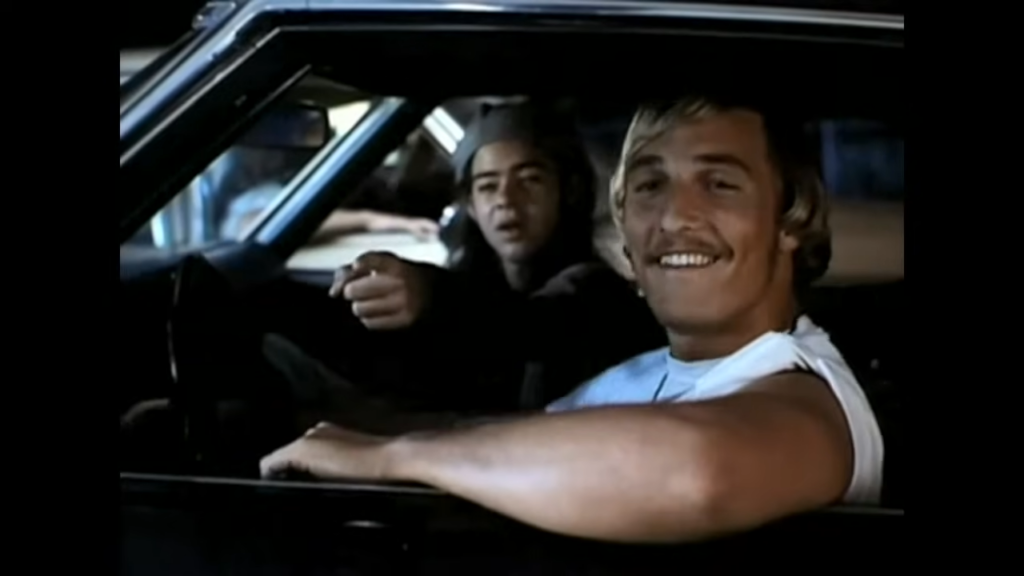
Linklater’s ensemble Criterion comedy following a sprawling cast of Texas high schoolers on the last day of school in 1976 was a box-office disappointment on release, undermined by a studio marketing campaign that misread the film as a broad stoner comedy rather than the plotless, hangout-style character study Linklater had actually made. Its reputation grew almost entirely through home video and cable rerun word of mouth, a slow-burn rediscovery that mirrors the trajectory of several other films on this list. Shot with a large, mostly unknown ensemble cast — several of whom, including Matthew McConaughey and Ben Affleck, went on to significant careers — the film’s structural refusal of conventional plot in favor of loosely connected vignettes was itself an argument, extending the observational style Linklater had already established with Slacker, that a film about adolescence didn’t need a contrived crisis to earn its emotional weight.