

The 1960s delivered some of the most memorable and outrageous sitcoms of the 1960s ever produced for American television. These shows brought laughter into living rooms across the country each week. Audiences tuned in to watch bumbling astronauts, suburban witches, and lovable monsters navigate life’s absurdities. The sitcoms of the 1960s offered a lighthearted escape from real-world tensions. Writers crafted clever storylines around extraordinary characters placed in ordinary situations. Each show developed a loyal fan base drawn to its unique humor and charm. The era produced comedy gold that still resonates with viewers today. This article spotlights ten of the silliest and most beloved entries from that golden age of television comedy.
“I Dream of Jeannie”

“I Dream of Jeannie” aired from 1965 to 1970. The show followed astronaut Tony Nelson and his genie companion, Jeannie. Barbara Eden starred as Jeannie, bringing charm and comedic energy to every episode. Larry Hagman played the perpetually flustered Tony with perfect comic timing.
Jeannie’s magic created chaos at every turn. She blinked objects in and out of existence with gleeful abandon. Tony spent most episodes scrambling to explain the inexplicable to his superiors. Their dynamic produced a steady stream of funny misunderstandings and outrageous situations.
The show blended fantasy and domestic comedy in a fresh way. Jeannie genuinely wanted to please Tony, but her solutions always backfired spectacularly. NASA officials repeatedly nearly discovered Tony’s unusual secret. The tension between Jeannie’s magical world and Tony’s buttoned-up military life drove episode after episode of delightful silliness.
“Gilligan’s Island”
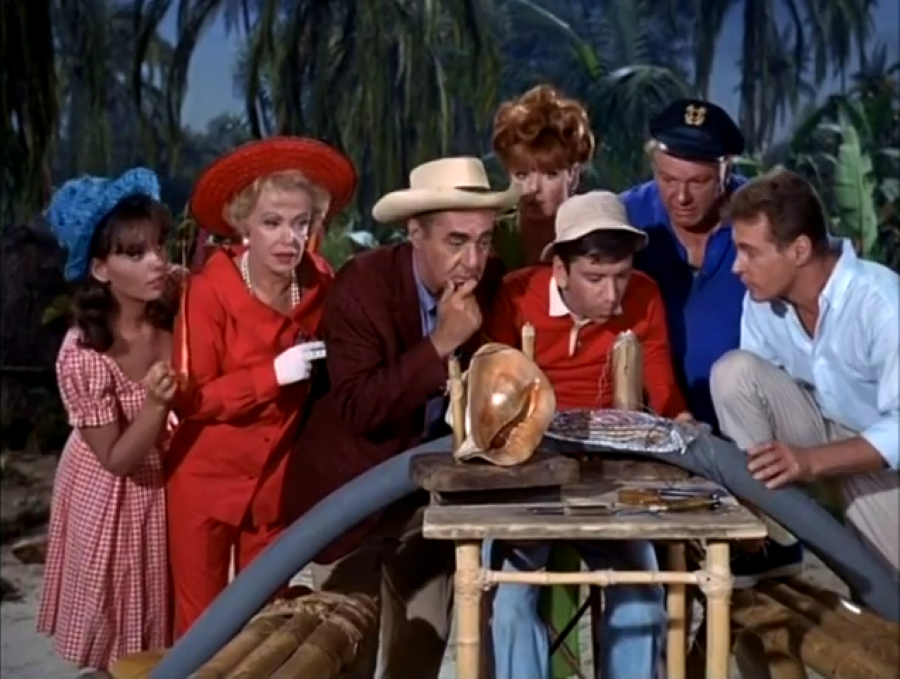
“Gilligan’s Island” premiered in 1964 and ran until 1967. Seven castaways found themselves stranded on a deserted island after a three-hour boat tour went wrong. Bob Denver played the accident-prone Gilligan with infectious enthusiasm. Alan Hale Jr. brought warmth and exasperation to the role of the Skipper.
The show thrived on its colorful ensemble cast. The Professor could build almost anything from coconuts and bamboo. Millionaire Thurston Howell III and his wife Lovey brought upper-crust absurdity to the island. Movie star Ginger glamorized their rustic surroundings with Hollywood flair.
Every rescue attempt ended in comedic disaster, usually thanks to Gilligan. The repetitive premise worked because each character reacted so differently to each crisis. Guest stars arrived via improbable means, adding fresh comedy to the mix. The show’s gentle, goofy humor earned it a passionate cult following that persists decades after its final episode.
“The Addams Family” – Silliest Sitcoms of The 1960s

“The Addams Family” debuted in 1964, based on Charles Addams’s cartoons from The New Yorker. The show presented a macabre household that considered itself perfectly normal. John Astin played the passionate and enthusiastic Gomez with theatrical flair. Carolyn Jones brought an otherworldly elegance to the role of Morticia.
The comedy came from the family’s complete obliviousness to their own strangeness. They found beauty in darkness and joy in the ghoulish. Uncle Fester ran electricity through his body for fun. Lurch, the giant butler, communicated mostly in mournful groans.
The show offered sharp satirical commentary on conformist suburban life. The Addams family found conventional people just as bizarre as others found them. This reversal gave the comedy an unexpected depth. Ted Cassidy’s Lurch and Jackie Coogan’s Fester became iconic figures in television history. The show proved that comedy could come from celebrating the unconventional rather than mocking it.
“Get Smart”

“Get Smart” premiered in 1965 and ran until 1970. The show lampooned Cold War spy films with sharp wit and boundless physical comedy. Don Adams played Maxwell Smart, Agent 86, with pitch-perfect deadpan delivery. Barbara Feldon brought intelligence and patience to Agent 99, his capable partner.
Smart’s incompetence was spectacular and endlessly entertaining. He fumbled gadgets, misread situations, and stumbled into solutions by accident. His shoe phone became one of the most iconic props in television history. The Cone of Silence, a device meant to ensure privacy, never worked properly and always made things worse.
Mel Brooks and Buck Henry created the show as a loving parody of the James Bond era. CONTROL fought against the villainous organization KAOS in increasingly ridiculous scenarios. Chief, played by Edward Platt, endured Smart’s blunders with visible suffering. The show earned multiple Emmy Awards during its run and remains a gold standard for comedy parody television.
“The Beverly Hillbillies”

“The Beverly Hillbillies” aired from 1962 to 1971. The show followed the Clampett family, Ozark mountain folk who struck oil and moved to Beverly Hills. Buddy Ebsen played patriarch Jed Clampett with quiet dignity and sharp comedic instincts. Irene Ryan stole scenes as the feisty, outspoken Granny.
The fish-out-of-water premise generated laughs from the very first episode. The Clampetts called their swimming pool a “cement pond.” Granny mistook California wildlife for back-home critters. Elly May, played by Donna Douglas, had a gift for taming wild animals but struggled with social norms.
The show became the highest-rated program on American television during its peak years. Its humor came from warmth rather than cruelty. The Clampetts were kind, generous people navigating an absurd world. Banker Milburn Drysdale, played by Raymond Bailey, provided endless comedy as he scrambled to please his wealthiest clients. The show celebrated simple values while gently mocking upper-class pretension.
“Hogan’s Heroes” – Silliest Sitcoms of The 1960s

“Hogan’s Heroes” premiered in 1965 and ran for six seasons. The show took the unlikely setting of a German prisoner-of-war camp and transformed it into a stage for brilliant comedy. Bob Crane played Colonel Robert Hogan with easy confidence and sharp tactical thinking. Werner Klemperer won two Emmy Awards playing the pompous, easily-fooled Colonel Klink.
Hogan’s team operated a sophisticated underground spy ring right under their captors’ noses. Sergeant Schultz, played by John Banner, provided the show’s most beloved catchphrase: “I know nothing!” His willful ignorance became a comedic touchstone for the entire run.
The prisoners consistently outsmarted their guards in creative and increasingly elaborate ways. The show required viewers to root for clever underdogs against bumbling authority figures. That formula proved irresistible. The cast’s chemistry made every scheme feel both ridiculous and inevitable. The show faced criticism for trivializing a serious historical period, but its comedy and camaraderie kept audiences tuning in each week for six successful seasons.
“Bewitched”

“Bewitched” premiered in 1964 and ran for eight seasons. The show introduced Samantha Stephens, a witch who chose to live as an ordinary suburban housewife. Elizabeth Montgomery played Samantha with grace, humor, and a deceptively simple nose twitch. Her signature magical gesture became one of the most recognizable images in television history.
Darrin Stephens, played first by Dick York and later by Dick Sargent, worked as an advertising executive. He insisted Samantha avoid using magic, which she tried her best to honor. Her mother Endora, played by Agnes Moorehead, viewed Darrin with open contempt and constant scheming. Their conflict provided a reliable source of comedic tension throughout the series.
The show functioned as both fantasy comedy and social commentary. Samantha had extraordinary abilities she willingly set aside to fit into conventional life. The humor arose from how impossible that task proved to be. Neighbor Gladys Kravitz, played by Alice Pearce and later Sandra Gould, spent eight seasons convinced something supernatural was happening next door. She was absolutely right, and nobody believed her.
“The Munsters”

“The Munsters” aired from 1964 to 1966. The show presented a family of classic movie monsters living in a crumbling Victorian house at 1313 Mockingbird Lane. Fred Gwynne played Herman Munster, a Frankenstein’s monster look-alike with the innocent heart of an enthusiastic child. Yvonne De Carlo brought warmth and beauty to Lily Munster, the devoted vampire wife and mother.
Al Lewis played Grandpa, a centuries-old vampire with endless schemes and questionable experiments. Butch Patrick portrayed Eddie, the young werewolf son with pointed ears and a pet dragon. The family’s one “normal” member was niece Marilyn, whom they considered a tragic oddity.
The comedy worked because the Munsters genuinely loved each other. They saw nothing unusual about their household or appearance. Reactions from the outside world provided the comedy rather than the family themselves. The show aired during the same era as “The Addams Family” on a rival network. Both shows explored the comedy of the outsider perspective, but “The Munsters” leaned harder into classic horror imagery and broad slapstick for its laughs.
“The Dick Van Dyke Show”- Silliest Sitcoms of The 1960s

“The Dick Van Dyke Show” premiered in 1961 and ran until 1966. Carl Reiner created the show and based elements of it on his own experiences as a television comedy writer. Dick Van Dyke played Rob Petrie, a writer for a fictional variety program. Mary Tyler Moore played Laura Petrie, his stylish and sharp-witted wife.
The show operated on two equally funny tracks. At the office, Rob worked alongside the neurotic Buddy Sorrell and the vain Sally Rogers, writing scripts for ego-driven star Alan Brady. At home, suburban life generated its own brand of comedy through neighborly mishaps and domestic disasters.
The writing on this show set a new standard for television comedy. The cast tackled physical comedy, wordplay, and character-driven humor with equal skill. Van Dyke’s pratfalls were masterclasses in physical performance. Moore brought a modern, independent quality to her role that resonated with audiences. The show won fifteen Emmy Awards during its run and influenced nearly every workplace comedy that followed it in American television history.
“The Andy Griffith Show”

“The Andy Griffith Show” aired from 1960 to 1968. The show centered on Mayberry, a small fictional North Carolina town where life moved at a gentle pace. Andy Griffith played Sheriff Andy Taylor, a widowed father raising his son Opie with wisdom and humor. The show’s warmth set it apart from the broader, more absurdist comedies of the era.
Don Knotts played Deputy Barney Fife, Andy’s well-meaning but spectacularly inept partner. Knotts won five Emmy Awards for the role, delivering a masterful comedic performance across his tenure on the show. Barney’s single bullet policy became one of television’s most enduring running jokes. His overconfidence and fragile ego produced comedy gold in nearly every episode.
Aunt Bee, played by Frances Baver, anchored the Taylor household with quiet comic dignity. Her cooking inspired mixed reactions despite her boundless enthusiasm. The show balanced humor with genuine heart throughout its run. It ranked as the number one series in American television during its final season. Few sitcoms of the 1960s matched its ability to generate consistent laughter while also delivering sincere emotional storytelling.