

The 2000s marked an unprecedented structural fracture in the television landscape, a decade wherein the traditional multi-camera, studio-audience sitcom—which had reigned supreme since the days of I Love Lucy—was systematically dismantled and replaced by single-camera, documentary-style, or rapid-fire satirical architectures that fundamentally redefined small-screen comedy.
As network executives nervously watched broadcast ratings erode in the face of expanded cable offerings and the dawn of digital piracy, a cohort of visionary showrunners abandoned canned laughter, artificial living room sets, and tidy twenty-two-minute moral resolutions in favor of intricate serialized continuity, cringe-inducing observational cringe, and dense, multi-layered visual gags. From the hyper-referential brilliance of Fox-canceled critical darlings to the claustrophobic cringe of British imports, the decade proved that television comedy could be as structurally complex as a literary novel—or at least as delightfully neurotic as a psychiatric evaluation. What follows is an exhaustive analysis of the best sitcoms of the 2000s, ones that not only defined the decade’s cultural vocabulary but also permanently elevated the artistic possibilities of the medium.
Arrested Development (2003–2006)
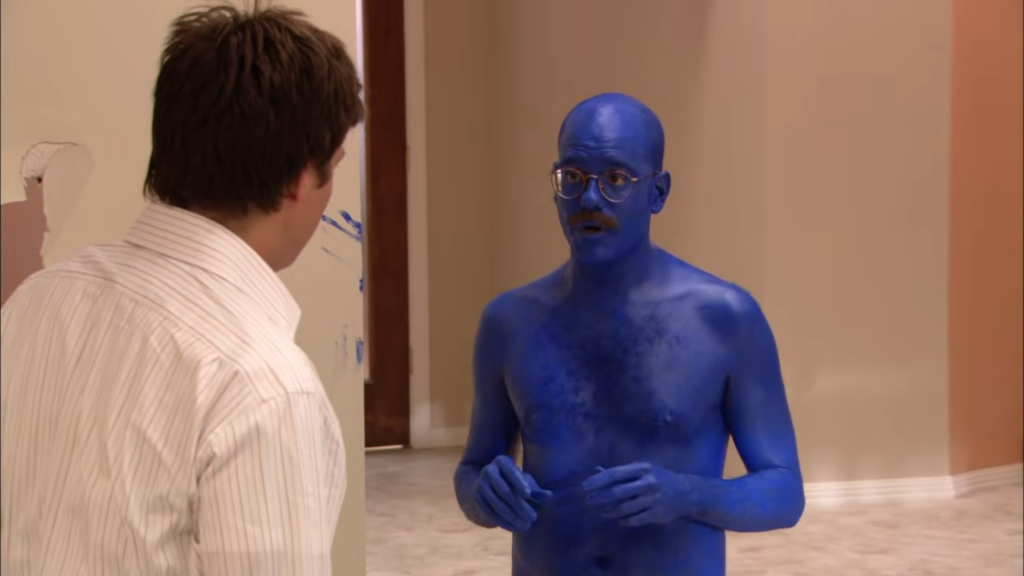
Premiering on Fox on November 2, 2003, Mitchell Hurwitz’s masterwork regarding the dysfunctional, real-estate-obsessed Bluth family remains the undisputed high-water mark of dense, hyper-referential single-camera comedy—a show so structurally intricate that its narrative payoffs frequently required three episodes, two background background-actors, and an omniscient Ron Howard voiceover to fully hit their mark.
Across its original 53-episode broadcast run, the series deployed an almost absurd level of textual symmetry—ranging from Tobias Fünke’s (David Cross) tragic career missteps as the world’s first “analrapist” (an unfortunate portmanteau of analyst and therapist) to George Michael’s (Michael Cera) unending, deeply uncomfortable yearning for his cousin Maeby (Alia Shawkat)—while systematically mocking the socio-political anxieties of post-9/11 Southern California upper-class decadence.
When George Bluth Sr. (Jeffrey Tambor) was incarcerated for white-collar crimes—and “light treason” in international waters—the burden of keeping the family solvent fell upon Michael Bluth (Jason Bateman), whose righteous self-martyrdom was continuously undermined by his own towering vanity and his inability to realize that his mother, Lucille (the late, magnificent Jessica Walter), was running the entire operation through sheer psychological warfare and relentless vodka consumption. The show’s cancellation in 2006 after three ratings-starved seasons was a tragedy of network television scheduling—specifically Fox’s baffling decision to air its final four episodes simultaneously against the Winter Olympics—yet its legacy as a miracle of comedic construction, featuring running gags like the “Never Nude” support group and the infamous frozen banana stand containing $250,000 in literal cash, remains entirely untarnished.
The Office (US) (2005–2013)
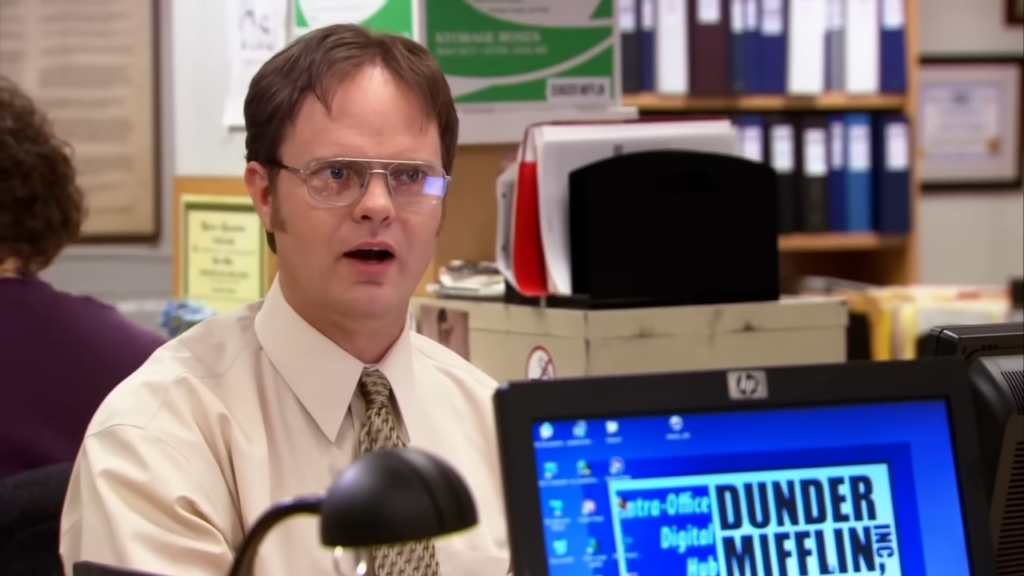
Adapted by Greg Daniels from Ricky Gervais and Stephen Merchant’s groundbreaking 12-episode BBC original, the American iteration of The Office debuted on NBC on March 24, 2005, as a midseason replacement that initially struggled to escape the imposing shadow of its British progenitor—going so far as to remap the pilot script almost word-for-word—before finding its own uniquely empathetic, distinctly American heartbeat in its second season.
By recalibrating Michael Scott (Steve Carell) from a pure, irredeemable monster of insecurity into a deeply lonely, desperate-to-be-loved middle manager whose ineptitude was balanced by a genuine, if terrifyingly misguided, affection for his workforce, Daniels transformed a bleak satire of corporate monotony into a juggernaut of network television.
The romantic tension between paper salesman Jim Halpert (John Krasinski) and receptionist Pam Beesly (Jenna Fischer)—built upon subtle glance-exchanges across a fluorescent-lit room, shared pranks played upon the hyper-militant, beet-farming Assistant to the Regional Manager Dwight K. Schrute (Rainn Wilson), and a agonizingly slow narrative burn that culminated in Season 3’s “Casino Night”—became the emotional backbone of prime-time television.
Across its 201 total episodes, shot with a two-camera documentary setup by cinematographer Randall Einhorn that utilized sudden zooms and whip-pans to capture non-verbal reactions, the series elevated the mundane realities of the paper distribution industry—from the paralyzing boredom of quarterly sales meetings to the localized drama of the Dundie Awards at a Scranton-area Chili’s—into an indelible cultural touchstone.
30 Rock (2006–2013)
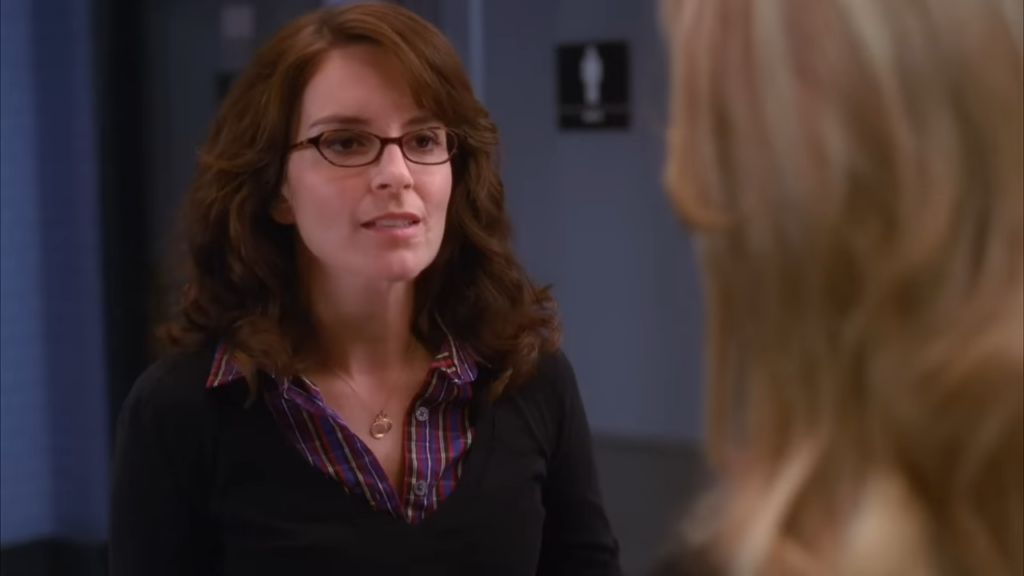
Conceived by Saturday Night Live head writer Tina Fey and debuting on October 11, 2006, as part of NBC’s acclaimed “Comedy Night Done Right” lineup, 30 Rock operated at an astonishing, breakneck joke-per-minute frequency that effectively merged the live-action cartoon pacing of The Simpsons with a ruthless, insider satire of corporate media conglomerates.
The series chronicled the chaotic backstage exploits of Liz Lemon (Fey), the junk-food-dependent head writer of a struggling sketch show called TGS with Tracy Jordan, as she navigated the absurd demands of her volatile stars—the unhinged diva Tracy Jordan (Tracy Morgan) and the narcissistically sociopathic Jenna Maroney (Jane Krakowski)—while enduring the relentless, vertical-integration mentorship of GE executive Jack Donaghy (Alec Baldwin in a career-defining role).
The show’s brilliance lay in its ability to balance absurd live-action non-sequiturs—such as Dr. Leo Spaceman’s (Chris Parnell) terrifyingly unethical medical advice or the impossible-to-pronounce indie film The Rural Juror—with sharp commentary on late-stage capitalism, television network desperation, and the exhausting reality of being a woman trying to “have it all” while actively eating a meatball sub in a hammock. Winning 16 Primetime Emmy Awards across its seven-season run, 30 Rock remains a monument to structural joke density, featuring guest appearances that ranged from Oprah Winfrey and Steve Martin to Elaine Stritch as Jack’s formidable mother, Colleen.
It’s Always Sunny in Philadelphia (2005–Present)

Created by Rob McElhenney, Glenn Howerton, and Charlie Day, and produced on a minuscule pilot budget of roughly $200 before premiering on FX on August 4, 2005, It’s Always Sunny in Philadelphia, one of the best sitcoms of the 2000s, inverted every sacred convention of the traditional sitcom format by centering its narrative on five utterly unredeemable, narcissistically sociopathic degenerates who run a failing Irish pub in South Philly.
The addition of Danny DeVito in Season 2 as Frank Reynolds—the grotesquely wealthy, troll-like father figure who abandoned corporate life to live in squalor with Charlie—catalyzed the show’s descent into glorious, anarchic depravity, establishing a template where every episode’s thesis statement was systematically dismantled by “The Gang’s” horrifying self-interest.
The series transformed the concept of character development into a reverse trajectory of moral degradation—witnessing Dee’s decay from an aspiring actress into a bird-like, spiteful menace, or Charlie’s continued reliance on consuming cat food and huffing spray paint to sleep—proving that audience longevity could be sustained through pure, unadulterated cynicism provided the comic rhythm remained unbroken.
Peep Show (2003–2015)

Created by Jesse Armstrong and Sam Bain and airing on Britain’s Channel 4 from 2003 to 2015, Peep Show introduced a radically immersive narrative technique to the sitcom framework: utilizing point-of-view camera angles exclusively, paired with internal voiceover monologues that allowed the audience to hear the most pathetic, paranoid, and shameful thoughts of its two main characters.
The series followed Mark Corrigan (David Mitchell), a socially paralyzed, WWII-history-obsessed loan manager, and Jeremy “Jez” Usborne (Robert Webb), an unemployed, profoundly delusional electro-musician, as they shared a bleak flat in Croydon, South London, mutually destroying each other’s romantic and professional lives through a toxic codependency.
Through Mitchell and Webb’s pitch-perfect performances—supported by Super Hans (Matt King), a crack-addicted, wildly unpredictable musician whose philosophical musings provided constant chaos—the series captured the existential dread of young adulthood with surgical precision.
Parks and Recreation (2009–2015)
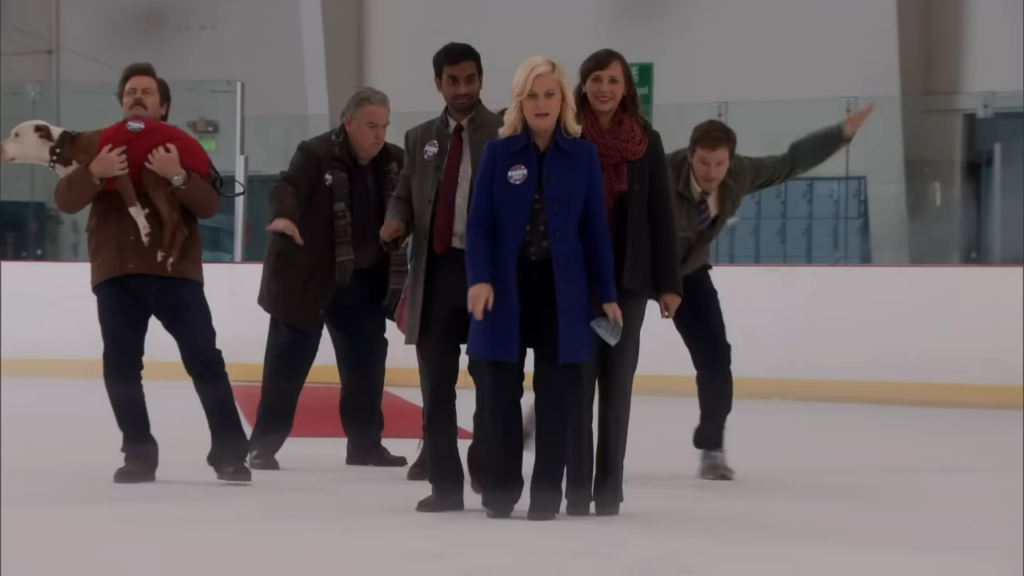
Originally developed by Greg Daniels and Michael Schur as a potential spin-off of The Office, Parks and Recreation premiered on NBC on April 9, 2009, and swiftly abandoned its initial, overly cynical tone to become a sunny, deeply optimistic comedy about the power of local government and female friendship. It’s abrupt change in tone quickly transformed it into one of the best sitcoms of the 2000s.
Centering on Leslie Knope (Amy Poehler), a tireless, waffle-loving mid-level bureaucrat in the fictional town of Pawnee, Indiana, the show built a vibrant, sprawling suburban universe populated by bizarre local media personalities, corporate candy monopolies (Sweetums), and a deeply ungrateful citizenry that routinely screamed at public town hall meetings.
The show’s genius stemmed from the brilliant counterweight provided to Leslie’s boundless civic optimism by her boss, Ron Swanson (Nick Offerman), a deadpan, mustache-toting libertarian who actively tried to dismantle the government from the inside while eating obscene quantities of meat and woodworking in secret. Supported by a stellar ensemble—including Chris Pratt as the lovable dimwit Andy Dwyer, Aziz Ansari as the wannabe mogul Tom Haverford, and Adam Scott as the traumatized former teen mayor Ben Wyatt—Parks and Recreation proved that a sitcom could possess a warm, genuine heart without sacrificing a shred of razor-sharp comedic timing or satirical edge.
Malcolm in the Middle (2000–2006)
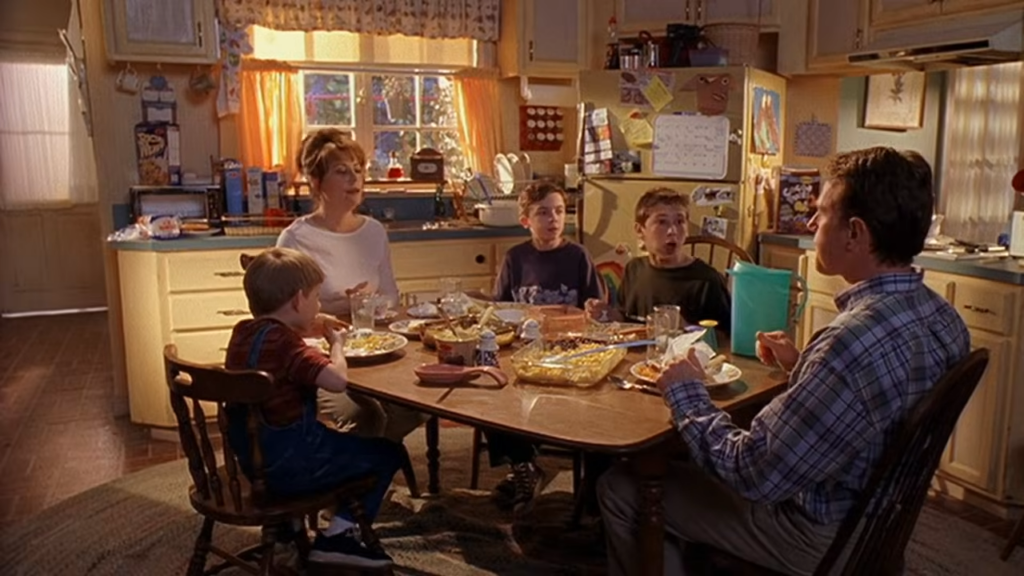
Debuting on Fox on January 9, 2000, Linwood Boomer’s Malcolm in the Middle was a quiet revolution in American television, casting aside the traditional laugh track, multi-camera studio setup, and polished upper-middle-class aesthetic in favor of a raw, chaotic single-camera depiction of working-class family survival.
The show starred Frankie Muniz as Malcolm, a middle child gifted with a genius-level IQ of 165 who broke the fourth wall to vent directly to the viewer about his deeply chaotic home life, anchored by his terrifyingly fierce mother Lois (Jane Kaczmarek) and his goofy, roller-skating, emotionally unstable father Hal—played by Bryan Cranston in a comedic masterclass long before his Breaking Bad days.
Across 151 episodes, the series captured the genuine financial anxieties of a lower-middle-class household—where meals consisted of leftover mystery casseroles, power was routinely shut off, and cars were held together by duct tape—without ever devolving into dreary melodrama. The show has recently been redeveloped, lending additional credence to the notion that it was one of the best sitcoms of the 2000s.