

The 70s TV shows most likely to be turned down today are Police Woman, I Dream of Jeannie, Three’s Company, The Dukes of Hazzard and Hogan’s Heroes, along with a few harmless oddities like Bowling for Dollars. Fourteen shows follow, each with the network, the dates and the reason it would face a hard sell now.
Updated October 28, 2026.
Yes, a few of these started in the 1960s. I Dream of Jeannie, Hogan’s Heroes and Bewitched all ended between 1970 and 1972, and The Tonight Show began in 1962. They are here because 70s audiences were still watching them.
TV was a very different place back then. There was no cable and no internet, and certainly no Netflix, Hulu or Amazon. You got what you got and you liked it. Anyone who grew up with rabbit ears on top of the set knows the dance of turning the antenna a little left, then a little right, until the picture came in. You had to switch the TV on and let it warm up. If you were not watching at the top of the hour, you missed your favorite show for good. Today you can find thousands of shows, movies and YouTube channels for any hobby you can name, and it is hard to believe we ever lived that way.
Society was different too. A lot of what we saw on TV in the 1960s and 1970s would not pass the smell test now. Race, politics, gender and other changing views would stop many of these shows before they got past the first pitch meeting. Plenty of them leaned on stereotypes that a lot of us would not accept today. What once seemed hysterically funny can look rude at best and offensive at worst. Others will say these old shows come from a simpler, more innocent time, when viewers were happy with makeup-wearing monsters, genies in bottles and castaways who built everything out of coconuts except a boat. Some of them were controversial, some were silly and some were downright dumb. They all made it to the air long before streaming on demand.
I have spent years rewatching classic TV with a notebook open, and 1970s network television is the decade I return to most. Three networks, one national audience and a standards office did the job that social media does now. A show could be silly, sexy or blunt and be gone in a season with no one noticing. If this is your era, the 10 silliest sitcoms of the 1960s make a good companion, and our list of the top rock stars of the 70s covers the music side.
Police Woman (1974-1978): breaking ground among 70s TV shows

Angie Dickinson played Sgt. “Pepper” Anderson, an undercover cop in the LAPD’s Criminal Conspiracy Unit, in a gritty police show. It is often called the first hit hour-long drama in prime time with a woman in the lead. Pepper went undercover as a nurse, a teacher, a flight attendant, a prison inmate, a dancer and a waitress, among other roles. Dickinson won a Golden Globe for the role and became a household name. NBC aired 91 episodes from September 13, 1974, to March 29, 1978. The show ranked 15th in season one, then slid to 74th by season four.
The trouble came with episode 8, “Flowers of Evil,” which aired November 8, 1974. Gay and lesbian groups protested how the episode showed lesbians as stereotypes. A week later activists stayed overnight in NBC’s corporate offices, and in 1975 NBC agreed not to rebroadcast it.
I Dream of Jeannie (1965-1970)
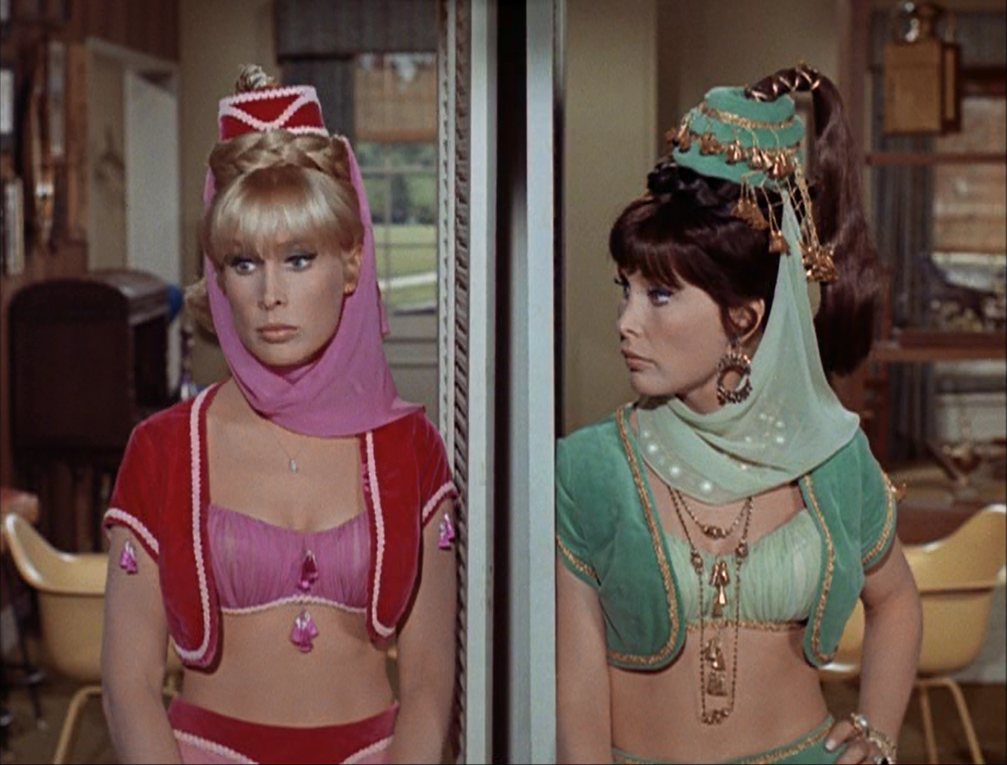
A handsome astronaut splashes down on a sandy beach and finds a bottle. Out comes a 2,000-year-old genie in a pink harem outfit who falls for him and stays devoted to him. He takes her home, where she is kept until she is summoned. Sidney Sheldon created the NBC series, which ran from September 18, 1965, to May 26, 1970, for 139 episodes. Barbara Eden played Jeannie and Larry Hagman played Tony Nelson.
Jeannie called her astronaut “Master,” and that is the part that probably would not go over well with viewers in 2026. The show was never a ratings giant. Its best season finish was 26th, in season four. It switched from black and white to color in season two.
Battle of the Network Stars (1976-1988)

ABC staged 19 competitions between November 13, 1976, and December 10, 1988, with stars from ABC, CBS and NBC racing in swimsuits and sweats. Howard Cosell hosted or co-hosted all but the 1985 edition. Events included swimming, kayaking, bowling and the baseball dunk, and the last-place network was eliminated before a final tug of war.
ABC finished with seven wins, CBS and NBC six each. Picture a network giving its rivals free promotion. That is the part that would struggle today. ABC revived the format in 2017 for ten episodes, but with character-based teams instead of networks.
Flying High (1978-1979)

CBS aired it from August 28, 1978, to January 23, 1979. Three flight attendants, Marcy Bower, Pam Bellagio and Lisa Benton, worked for the fictional Sun West Airlines in Los Angeles while Captain Doug March chased them. There were 18 episodes plus a two-hour pilot film, and three never aired.
Critics treated it, along with The American Girls, as a copy of Charlie’s Angels, and neither show took off. It was cheesy even by the standards of the day. The flight attendants ran into lecherous pilots, handsome senators and mysterious newspaper reporters on their trips. That cheesy formula is why it is a footnote now.
Donny & Marie (1976-1979)

Donny was 18 and Marie 16 when ABC launched their variety hour on January 23, 1976. It opened with an ice skating number, with dancers on skates called the Ice Angels. The rest of the hour mixed comedy skits, songs and a closing balloon drop. The entertainment was squeaky clean, and the pair were said to be the youngest hosts of a variety show at that time. The show ran Fridays at 8 p.m. Eastern for most of its run and produced 78 episodes before ending May 27, 1979.
It finished 27th in its first season and 62nd in its last. A clean, family variety hour on a network is a tougher sell now that variety belongs to YouTube and TikTok. Still, on a Friday night in the late 1970s, Donny & Marie was the best thing on.
Charlie’s Angels (1976-1981)

Ivan Goff and Ben Roberts created the ABC series about three women who finish the police academy, get tired of jobs like meter maid and crossing guard, and go to work as private investigators for the Townsend Agency. Their boss, Charlie, is a voice on a speakerphone, and they never see his face. John Forsythe voiced him. He called them his Angels, and the rest is TV history. It ran from September 22, 1976, to June 24, 1981, for 115 episodes and finished fifth in season one.
Kate Jackson, Farrah Fawcett and Jaclyn Smith led the cast. Cheryl Ladd replaced Fawcett in season two as Kris Munroe, the younger sister of Fawcett’s character, Shelley Hack replaced Jackson in season four and Tanya Roberts replaced Hack in season five. Critics coined “jiggle TV” for its emphasis on the stars’ sex appeal.
Three’s Company (1977-1984): one of the 70s TV shows built on a gag

Jack Tripper moves in with two women roommates in a Santa Monica apartment owned by the Ropers. To keep landlord Stanley Roper calm about any hanky-panky going on upstairs, Janet tells him Jack is gay, and the show spends eight years protecting that lie. Most of us have told a small fib to keep the peace, and watched it get bigger than we planned. ABC adapted it from the British series Man About the House.
It ran from March 15, 1977, to September 18, 1984, for 172 episodes. It ranked 11th in season one, third in season two and second in seasons three and four. John Ritter died on September 11, 2003, at age 54. Norman Fell, who played the fan-favorite Mr. Roper, died on December 14, 1998. A pitch built on that fake-gay gag would be hard to sell in a writers’ room today.
The Love Boat (1977-1986)

Gavin MacLeod played Captain Merrill Stubing aboard the Pacific Princess, a real Princess Cruises ship based in Los Angeles, with stops in Puerto Vallarta, Acapulco and Mazatlan. Each hour was built around the ship’s captain and his crew, which included the doctor, the cruise director and the bartender. Passengers came aboard looking for love and adventure. Each hour carried three storylines, a crew comedy, a romance and a drama, all wrapped up by the end of the hour, with a laugh track under it. Hundreds of guest stars came aboard over the years, including Jamie Lee Curtis, Billy Crystal and Charo, and 32 Academy Award winners were among them. Anyone who has been on a cruise knows how fast strangers turn into friends by the third night.
ABC ran 245 episodes from September 24, 1977, to May 24, 1986, on Saturday nights alongside Fantasy Island. The show usually ranked in the top 20 in its first seven years and peaked at fifth in season four. A laugh-track hour of cruise romance is hard to pitch in an age of prestige drama.
All in the Family (1971-1979)

Norman Lear developed it from the British series Till Death Us Do Part, and Carroll O’Connor played Archie Bunker, who offended nearly everyone he met, and a lot of viewers too. The show was not afraid to take on racism, politics, sex and other tough subjects of the day. It may be the most controversial show of the early 1970s. Before the premiere, CBS said the show “seeks to throw a humorous spotlight on our frailties, prejudices, and concerns.”
It ran from January 12, 1971, to April 8, 1979, over nine seasons and 205 episodes. It led the yearly Nielsen ratings from 1971 to 1976, the first series to hold No. 1 five years in a row, and was the first sitcom to win Emmys for all four lead actors. I would argue it is the one show here that a network could still make, with louder arguments.
Bowling for Dollars (1970s)

Bert Claster, who also created Romper Room, franchised this one, and local stations produced their own editions with local hosts and bowlers. Tapings happened at the neighborhood alley or on lanes built inside a studio. In some versions a strike or spare paid $20, and the jackpot for two strikes in a row started at $200, $300 or $500 and grew by $20 each time it went unclaimed.
Hosts included Chick Hearn on KTLA in Los Angeles and Verne Lundquist on WFAA in Dallas. A viewer could win too by mailing a Pin Pal postcard. Bowling was a bit of a craze in the 1970s, and the show was cheap to make. Many stations aired it five afternoons a week. Local TV rarely produces shows like this now, though Detroit’s WADL has aired a revival since 2013.
The Tonight Show Starring Johnny Carson (1962-1992)

Carson hosted for NBC from 1962 to 1992, succeeding Jack Paar, and moved the show from New York to Burbank on May 1, 1972. Ed McMahon announced, and Doc Severinsen led the NBC Orchestra from 1967 to the end. Through the 1970s it ran 90 minutes. Carson’s 1980 contract cut it to an hour, with guest hosts covering Mondays and most of his 15 weeks off a year.
The show was NBC’s most profitable in the mid-1970s, earning $50 to $60 million a year, and more than 50 million watched the 1992 finale. A 90-minute talk show with a slow second half is the part no network would schedule today. If you watched Carson in his prime, it is hard to believe he could not cut it now. But the second half of the show moved at a slower pace than we expect. Most of us have a favorite old show we could watch in reruns forever, even if we admit it dragged in places.
Dukes of Hazzard (1979-1985): 70s TV shows and the flag problem
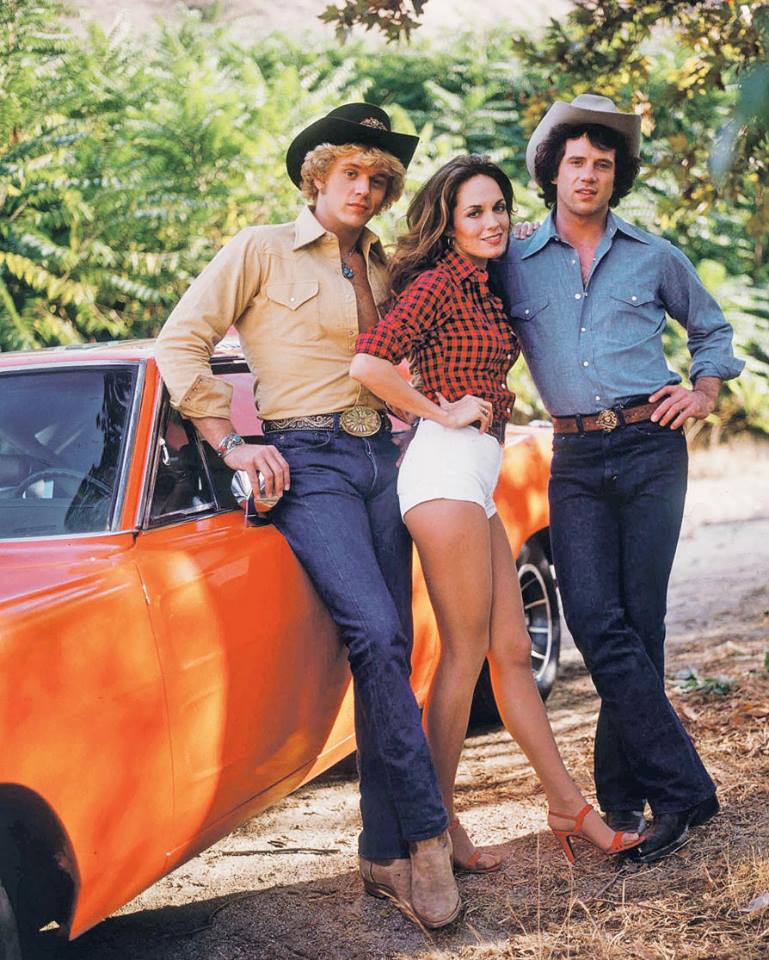
On probation for hauling their Uncle Jesse’s moonshine in Hazzard County, Georgia, cousins Bo and Luke Duke drive the General Lee, an orange 1969 Dodge Charger with a Confederate battle flag on its roof. Because of the probation they carry no guns, so they use compound bows, sometimes with dynamite-tipped arrows. Sorrell Booke played Boss Hogg, the crooked county commissioner the boys try to outsmart, and James Best played Sheriff Rosco P. Coltrane. Their cousin Daisy worked as a waitress at the Boar’s Nest, the bar Boss Hogg owned.
CBS aired 147 episodes from January 26, 1979, to February 8, 1985, usually on Friday nights before Dallas. Estimates of how many Chargers the show went through run from about 255 to 325, and about 17 originals survive. Catherine Bach brought her own high-cut jean shorts to the first day of filming. Network executives worried her famous legs and short shorts were too much for prime time, and the two sides settled on pantyhose under the shorts. The style became known as daisy dukes. TV Land began airing reruns on June 10, 2015, and pulled them about three weeks later after the Charleston church shooting and the flag debate.
Hogan’s Heroes (1965-1971)

A sitcom set in a German prisoner-of-war camp sounds impossible, but it really happened, and people watched. CBS ran 168 episodes from September 17, 1965, to April 4, 1971. Colonel Robert Hogan leads Allied prisoners in sabotage and espionage from Stalag 13 while Commandant Klink and Sergeant Schultz stay oblivious. Season one ranked ninth. The show ran for six seasons, nearly as long as the war itself.
The cast carried real history. Werner Klemperer, who played Klink, won Emmys in 1968 and 1969, and his family fled Nazi Germany in 1933. John Banner fled Austria in 1938 and served as a U.S. Army sergeant in World War II. Robert Clary, who played LeBeau, survived three years in a concentration camp.
Bewitched (1964-1972)

Samantha, a beautiful witch played by Elizabeth Montgomery, marries a mortal, Darrin, who wants a normal suburban wife. Her family disapproves of the “mixed marriage” and keeps butting into their lives, and Sam keeps using her magic to get out of trouble. Dick York played Darrin from 1964 to 1969 and Dick Sargent from 1969 to 1972. ABC aired 254 episodes from September 17, 1964, to March 25, 1972.
It began in black and white and moved to color in season three, 1966-67. Bewitched finished second in its debut season, stayed in the top 10 for three years and fell to 72nd in season eight. It won three Emmys.
70s TV Shows FAQ
Which 70s TV shows would not air today?
The strongest cases here are Police Woman, whose Flowers of Evil episode drew protests in 1974 before NBC agreed in 1975 not to rebroadcast it, Three’s Company, built on a fake-gay gag, and The Dukes of Hazzard, whose General Lee carried a Confederate flag until TV Land pulled its reruns in 2015.
What was the most-watched 70s TV show?
All in the Family topped the yearly Nielsen ratings from 1971 to 1976, the first series to hold No. 1 for five straight years. Three’s Company ranked second in seasons three and four, and Charlie’s Angels finished fifth in its first season.
How many episodes did Three’s Company have?
Three’s Company had 172 episodes over eight seasons on ABC, from March 15, 1977, to September 18, 1984. It was adapted from the British sitcom Man About the House, and its most-watched episode was An Anniversary Surprise, aired March 13, 1979.
Why was Charlie’s Angels called jiggle TV?
Critics used the label for the show’s emphasis on the lead actresses’ sex appeal. Charlie’s Angels ran on ABC from September 22, 1976, to June 24, 1981, for 115 episodes. Farrah Fawcett left after season one, and Cheryl Ladd replaced her as Kris Munroe.